Rain is commonly a part of working on construction sites across Australia, and for contractors managing earthworks, road preparation, trench backfill or general civil construction projects, wet weather often raises the same question: can you compact in the rain?
The answer depends less on the rain itself and more on what that rain has done to the material being compacted. A passing shower may have little impact on a well-draining granular layer, while the same amount of rain can quickly make other cohesive soils or poorly drained soil difficult to work with.
Under certain conditions and with certain soil types, compaction can continue safely and effectively. In others with too high a moisture content, continuing too soon can reduce compaction quality, damage the material and create issues that may only become obvious later in the project.
Wet weather compaction is not simply a question of whether the ground looks wet or dry. Soil type, moisture content, drainage, lift thickness, site traffic and equipment selection all influence whether the material remains suitable for compaction. Understanding how those factors interact can help contractors make better decisions during and after rain, reduce unnecessary downtime and avoid rework caused by compacting material that is too wet to respond properly.
Table of Contents
Why Rain Affects Some Soils More Than Others
Moisture Content and Compaction
Can You Compact Soil in the Rain?
A Practical Guide to Compaction After Rain
Equipment Selection Still Depends on Ground Behaviour
Common Mistakes When Compacting Wet Soil
Verifying Compaction After Wet Weather
Rain Does Not Always Stop Compaction
Why Rain Affects Some Soils More Than Others
One of the reasons wet weather compaction can be difficult to judge is that different soils respond to moisture in very different ways. Two sites may receive the same rainfall, yet the compaction outcome can be completely different depending on the material, how well the area drains and how much moisture was already present before the rain arrived.
- Granular materials: Sand, gravel and crushed rock are generally permeable, allowing water to move through the layer more freely. When these materials are too dry, a controlled amount of moisture can assist compaction by helping the particles move, settle and interlock into a denser arrangement under the roller.
- Cohesive materials: Clay and some silty soils hold water more readily. As moisture increases, the material can lose strength and become more plastic under load. Instead of compacting into a firmer layer, saturated cohesive soil may form a wave in front of the machine, stick to the drum or tyres, rut under traffic, or pump water and fines back to the surface.
This is why rainfall totals alone do not provide enough information to decide whether compaction should continue. What matters is how the ground behaves once the machine is operating on it. A granular pavement layer may remain stable after light rain, while a clay subgrade may become unsuitable much sooner if the moisture cannot drain away.
Moisture Content and Compaction
Successful compaction depends on having the material within a workable moisture range. Every soil has an optimum moisture content, often referred to as OMC. This is the moisture condition at which the soil can typically achieve its best dry density for a given compactive effort.
In practical terms:
- Too dry: The soil particles resist movement and do not readily rearrange into a denser structure. Adding controlled moisture can reduce friction and allow the compaction equipment to work more effectively.
- Close to OMC: The material contains enough moisture to assist particle movement without losing the strength and stability needed for effective compaction.
- Too wet: Excess water fills the voids between soil particles, limiting the material’s ability to densify under load. Additional roller passes cannot force this water out in a controlled or useful way and may cause the material to move, pump or break down.
This is particularly important with cohesive soils. Once clay has moved beyond a workable moisture condition, increasing the number of passes, using more vibration or choosing a heavier roller will not necessarily solve the problem and usually makes it worse. The material often needs time to drain, dry or be reworked before compaction can continue effectively.
Can You Compact Soil in the Rain?
Soil can sometimes be compacted in the rain, provided both the ground remains stable and the material is still within a suitable moisture content range. Light rainfall does not automatically stop compaction, especially where the material is granular, the working area drains well, and there is no standing water or visible movement under the machine.
The decision becomes more difficult once rainfall changes how the ground responds to load. Warning signs that the material may no longer be suitable for compaction include:
- Deeper rutting under the roller or site traffic
- Movement or a visible wave forming in front of the drum
- Water and fines rising to the surface
- Standing water across the working area
- A noticeable loss of bearing strength or stability
Surface moisture on its own may still be manageable. However, if these warning signs appear, continuing to roll can weaken the layer, disturb the soil structure and create a poor foundation for the next stage of work.
A Practical Guide to Compaction After Rain
The following guide provides a general indication of how site conditions can influence wet weather compaction decisions. It should always be considered alongside project specifications, site testing and the judgement of the project team.
Site condition | Compact or wait? | Recommended approach |
Light surface moisture | Proceed with care | Monitor the ground and drum response and compact in controlled lifts. |
Granular soil after light rain | Usually suitable | Continue if the material remains stable, drains well and does not move under the roller. |
Saturated soil with standing water | Wait | Allow the area to completely drain or dry before recommencing compaction. |
Clay showing waves, pumping or rutting | Wait | Continuing is unlikely to improve density and may damage the material. |
Dry surface over wet material below | Assess carefully | Check the full lift or subgrade condition before rolling. |
One of the most common mistakes after rain is assuming the surface tells the whole story. A working area can appear dry after several hours of sun or wind, while moisture remains trapped deeper in the material or subgrade. Rolling this material too soon may produce a surface that looks acceptable, while leaving weaker material below that later settles, moves or fails to meet compaction requirements.
Operators and supervisors are often the first to notice changes in how the material is behaving. Machine travel, surface movement, rutting, pumping and the way the material responds across multiple passes can all provide useful clues about whether compaction is still effective.
Equipment Selection Still Depends on Ground Behaviour
When conditions remain suitable for compaction after rain, equipment selection still matters, but it should not be reduced to choosing the biggest available roller or adding more passes to make up for wet ground.
A machine that is well suited to the application in normal conditions may still be the right choice after light rain, provided the material remains stable and workable. Once the material becomes saturated, however, no piece of compaction equipment will enable the ground to achieve any proper compaction result.
The main equipment and site considerations include:
- Cohesive materials: Clay and silt must retain enough strength to support the machine and respond to kneading or other compaction effort. If water and fines are moving to the surface, continued rolling is unlikely to improve density and may make the material harder to recover.
- Granular materials: Gravel, sand, crushed rock and road base may remain workable after light rain where the layer drains well and stays stable. Compaction should be reassessed if water is retained within or on top of the layer, the surface begins moving under vibration, or the material no longer locks together properly under load.
- Access and confined areas: Trenches, low points and smaller civil works can become more difficult to manage when water collects around services or within the working area. Equipment selection must account for the material, operator safety, site access and the ability to achieve consistent compaction across the full area.
The main point is that wet weather does not change the basic principles of compaction, but it does make the condition of the material more important. Equipment should be selected to suit the soil, the space and the required outcome, while recognising that unsuitable ground conditions cannot be corrected by machine choice alone.
On larger development sites, particularly those involving deep lift fill, uncontrolled fill, large building platforms or broad earthworks areas, wet weather and moisture conditions may also form part of a wider ground improvement discussion. In these applications, conventional layer-by-layer compaction is not always the only option considered. Landpac’s High Energy Impact Compaction, for example, may be suitable for some large-scale deep lift ground improvement projects across a broader moisture range than many conventional compaction methods, depending on the material, site conditions and project requirements.
Common Mistakes When Compacting Wet Soil
Wet weather does not always create compaction problems by itself. Issues often occur when work resumes before the material has recovered, or when the surface condition is used as the only guide.
Common mistakes include:
- Relying on surface appearance: A dry-looking surface can hide moisture deeper in the lift, particularly in clay or poorly drained material. Rolling may seal the surface while leaving weaker, uncompacted material below.
- Continuing when the ground is pumping: When water and fines are forced upwards under load, the material is no longer responding as intended. More passes, higher vibration or a heavier machine will not remove excess moisture and may increase movement.
Compacting lifts that are too thick: Wet or variable material can be difficult to compact evenly through its full depth. Where appropriate and permitted by the project requirements, reducing the lift thickness can help the compaction effort reach through the material more consistently.
Verifying Compaction After Wet Weather
Visual assessment is useful, but it should not be the only method used on projects where compaction quality is critical. After wet weather, the condition of the surface may not reflect the condition of the full lift or subgrade, which makes verification especially important before the next layer or stage of construction begins.
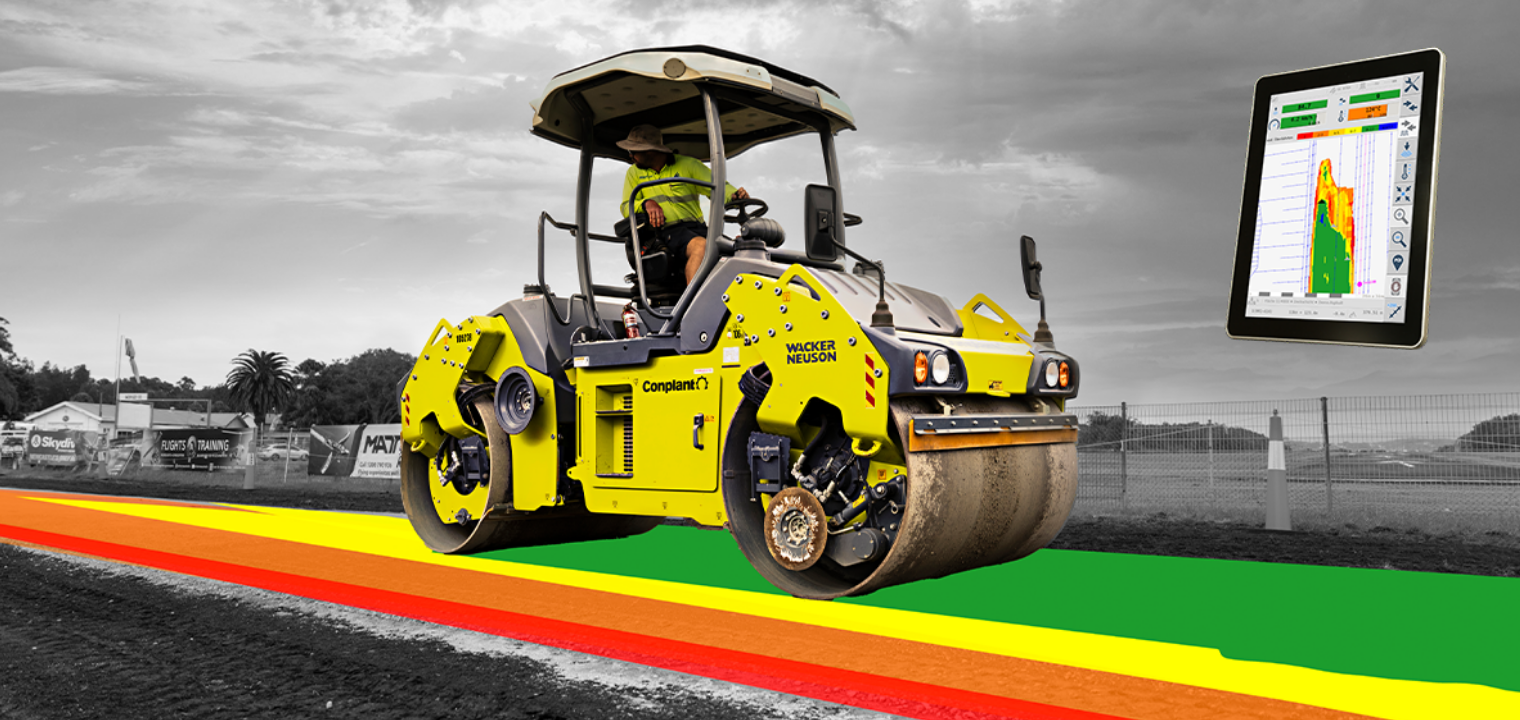
Field testing remains an important part of confirming whether the required compaction outcome has been achieved. On some projects, Intelligent Compaction systems can also provide additional feedback by helping operators monitor changes in ground response during rolling. Where available, this can support better decision-making across variable areas, without any further excavation, particularly where rainfall has affected some parts of the site more than others.
These systems do not replace project specifications or formal verification testing, but they can provide useful information about compaction consistency and any changing ground conditions. The objective is to make sure the material is performing as required before any further construction continues over the top of it.
Rain Does Not Always Stop Compaction
Compacting soil in the rain is not a simple yes or no decision. Light rain may have little impact on a well-drained granular material, while prolonged rain can quickly make cohesive soils unsuitable for compaction. The deciding factor is the condition of the material and how it behaves under load.
Successful wet weather compaction relies on understanding the soil type, managing moisture content, selecting equipment that suits the application and recognising when the ground is no longer suitable to continue. For contractors, this can help protect both productivity and the quality of the finished work.
Rain will always influence construction projects, but it does not always need to stop compaction. The key is knowing the difference between workable moisture and unsuitable ground conditions.
Need Help Choosing the Right Compaction Equipment?
Wet weather can make compaction decisions less straightforward, particularly when ground conditions vary across a site or change quickly after rainfall.
Conplant works with contractors across Australia to supply compaction equipment suited to the material, access requirements and scale of the job. Whether the work involves road base, trench backfill, clay, granular material or confined civil works, choosing equipment that matches the site conditions can help support productivity without compromising the quality of the finished work.
If you have a project coming up and need support selecting the right compaction equipment, contact the Conplant team to discuss your requirements.
Frequently Asked Questions
Can you compact soil in the rain?
Yes, soil can sometimes be compacted in the rain, provided the material remains stable and within a suitable moisture range. Rain itself does not prevent compaction, but saturated or unstable ground conditions can make effective compaction difficult or impossible.
Is it better to compact soil wet or dry?
Soil usually compacts best when it is close to its optimum moisture content. Material that is too dry can be difficult to compact because the particles resist movement, while material that is too wet can lose strength, rut, pump or deform under the machine.
How wet is too wet for soil compaction?
Soil is generally too wet for compaction when there is standing water, excessive rutting, visible pumping, heavy sticking to drums or tyres, or loss of stability under equipment. These signs indicate that the material is no longer responding properly to compaction effort.
Does rain help soil compact?
Light rain can help some dry granular materials by increasing moisture toward a more workable range. Excessive rain, however, can reduce soil strength and make compaction difficult, particularly in clay or poorly drained material.
What equipment works best for wet soil compaction?
The right equipment depends on the soil type and site conditions. Padfoot rollers are generally suited to cohesive soils such as clay, while smooth drum rollers are commonly used for granular materials. Remote trench rollers and smaller compactors may be better suited to confined areas or trench backfill.
How do you know when to stop compacting after rain?
Compaction should be stopped or reassessed when the ground shows signs of pumping, deep rutting, standing water, visible movement or loss of bearing strength. Continuing in these conditions is unlikely to improve density and may damage the material.