Every civil construction project relies on good compaction, yet it is often one of the least visible aspects of the work. Once the next layer is placed or the pavement is laid, the effort beneath it disappears from view. If the project performs as intended, few people think about the compaction that made it possible. If problems emerge years later, however, the quality of those early decisions often comes back into focus.
Settlement, pavement deformation, uneven surfaces and premature maintenance rarely occur because a roller failed to do its job. More often, they are the result of decisions made before, during and after any compaction takes place. Understanding the ground, selecting the appropriate methodology, matching equipment to the application and verifying the outcome all influence the long-term performance of the completed asset.
The Austroads Guide to Road Design reinforces this broader view of infrastructure delivery, recognising that long-term performance is achieved through sound engineering decisions across every stage of construction rather than any single activity. Compaction is one of those stages. While it may only occupy a relatively small part of a project’s construction program, its influence extends throughout the life of the asset.
As project specifications become more demanding and contractors work across increasingly varied ground conditions, compaction quality is becoming less about simply operating a roller and more about making informed decisions throughout the entire process.
Table of Contents:
Compaction Is More Than Just Rolling the Ground
Why Compaction Quality Still Creates Problems
Quality Starts Before the Roller Arrives
Looking Beyond Surface Compaction
Compaction Is More Than Just Rolling the Ground
It is easy to think of compaction as the process of making multiple roller passes until the ground appears finished. In reality, the objective is much broader than just this.
Compaction is intended to increase the density of soil or construction material by reducing the volume of air voids, creating a stable platform in a solid state capable of supporting future loads. Achieving that outcome depends on how the material responds to compactive effort, not simply how many times a machine travels across it.
This distinction is important because no two projects are identical.
Road construction typically involves multiple pavement layers with differing material characteristics and performance requirements. Residential subdivisions often encounter changing soil profiles across relatively short distances. Commercial developments may require working platforms capable of supporting substantial structural loads, while trench reinstatement introduces confined spaces and varying backfill materials that require a different approach altogether.
Although the objective remains the same, the path to achieving it changes from project to project. Successful compaction is therefore not defined by repeating the same process, but by selecting the most appropriate methodology for the conditions encountered.
Why Compaction Quality Still Creates Problems
Ground Conditions Are Never the Same
Ground conditions are one of the few aspects of construction that cannot be standardised.
Natural soils vary across individual sites. Moisture content changes with soil types and weather conditions. Imported fill can differ between deliveries, while excavation frequently reveals conditions that were not fully apparent during initial investigation or testing.
Each of these variables influences how material behaves during compaction.
A methodology that produces excellent results in one section of a project may produce entirely different outcomes elsewhere if the soil type, moisture content or underlying conditions change. Additional roller passes alone cannot compensate for material that is outside its optimum compaction range or a methodology that is unsuited to the application.
Good compaction, therefore, begins with understanding the ground being treated. Decisions made before the roller starts often have a greater influence on the quality of the outcome rather than the rolling process itself.
One Method Doesn't Suit Every Application
Just as no two sites are identical, neither are the methods used to compact them.
Granular and mixed materials behave differently to cohesive soils. Clay requires a different approach to road base. Engineered fill, trench backfill and recycled materials all respond differently to any compactive effort.
This means equipment selection is not simply about choosing a larger roller or applying more energy.
Machine weight, drum configuration, vibration characteristics, working width, site access and project specifications all influence whether a particular roller is appropriate for the task. Selecting compaction equipment that matches the material and construction environment helps achieve more consistent outcomes than relying on a single machine across every stage of a project.
This is where specialist knowledge becomes very valuable. Rather than viewing compaction equipment as interchangeable, contractors increasingly recognise that matching the right machine to the right application contributes directly to productivity, consistency and long-term asset performance.
As Australia’s largest compaction specialist, Conplant works with all types of contractors every day to help make those decisions, providing access to a broad range of compaction equipment suited to different materials, project requirements and site conditions.
What Happens When Compaction Isn't Right
The consequences of poor compaction are rarely immediate. In many cases, construction progresses without any obvious indication that a problem exists beneath the surface. It is only after the asset enters service that deficiencies begin to emerge.
Excess settlement is one of the most common examples. As inadequately compacted material consolidates under load, pavements may deform, cracks can develop, and uneven surfaces begin to appear. Ride quality deteriorates, maintenance requirements increase, and, in some cases, sections of work may require reconstruction well before the end of their intended design life.
Importantly, these outcomes are not usually the result of faulty equipment. More often, they reflect decisions made earlier in the project. Material may not have been compacted at its optimum moisture content, or the number of passes is too low. The selected compaction methodology may not have suited the material being treated. Equipment may have been appropriate for one section of the project but less effective elsewhere as conditions changed.
When viewed this way, compaction quality becomes less about the roller itself and more about the quality of the decisions that surround its use.
Quality Starts Before the Roller Arrives
Planning
Successful compaction begins long before construction equipment reaches the work area.
Reviewing geotechnical information, understanding project specifications and identifying likely ground conditions all help establish the most appropriate compaction methodology. Sequencing works correctly, managing moisture content and preparing suitable lift thicknesses further improve the likelihood of achieving specification without unnecessary and costly rework.
Planning also provides an opportunity to anticipate changing conditions before they become construction issues. Rather than reacting once quality problems become apparent, contractors can adapt their approach as site conditions evolve.
Like many aspects of construction, compaction rewards preparation. The better the understanding of the material before work begins, the more informed the decisions become throughout the project.
Equipment Selection
Selecting compaction equipment should be viewed in much the same way.
Choosing the appropriate roller involves considerably more than matching machine size to the project. Soil type, moisture content, material characteristics, working width, site access, drum configuration, vibration settings and specification requirements all influence which machine is best suited to the application.
It is increasingly common for civil contractors to utilise several different roller types across a single project, with each machine performing a specific role as construction progresses through different stages.
Rather than asking which roller is the “best”, the more useful question is which roller is best suited to the conditions at hand.
As Australia’s largest compaction specialist, Conplant works alongside contractors to help answer that question, supporting equipment selection based on project requirements rather than assumptions or habit.
Verification Matters Just As Much As Compaction
Even the best planning and equipment selection need to be supported by verification.
Compaction should never be judged solely by what appears to have happened on the surface. Verification provides confidence that the engineering objectives have actually been achieved and that the completed work satisfies project requirements.
This philosophy is reflected in the AS 3798-2007 Guidelines on Earthworks for Commercial and Residential Developments, which approaches earthworks as a controlled process involving specification, placement, inspection and testing rather than simply completing the construction activity.
Density testing, moisture testing, proof rolling and other quality assurance processes remain fundamental to confirming that compaction requirements have been achieved. Rather than acting as a final administrative exercise, these verification methods provide confidence that subsequent stages of construction can proceed on a stable foundation.
The industry is also placing greater emphasis on improving visibility during the compaction process itself.
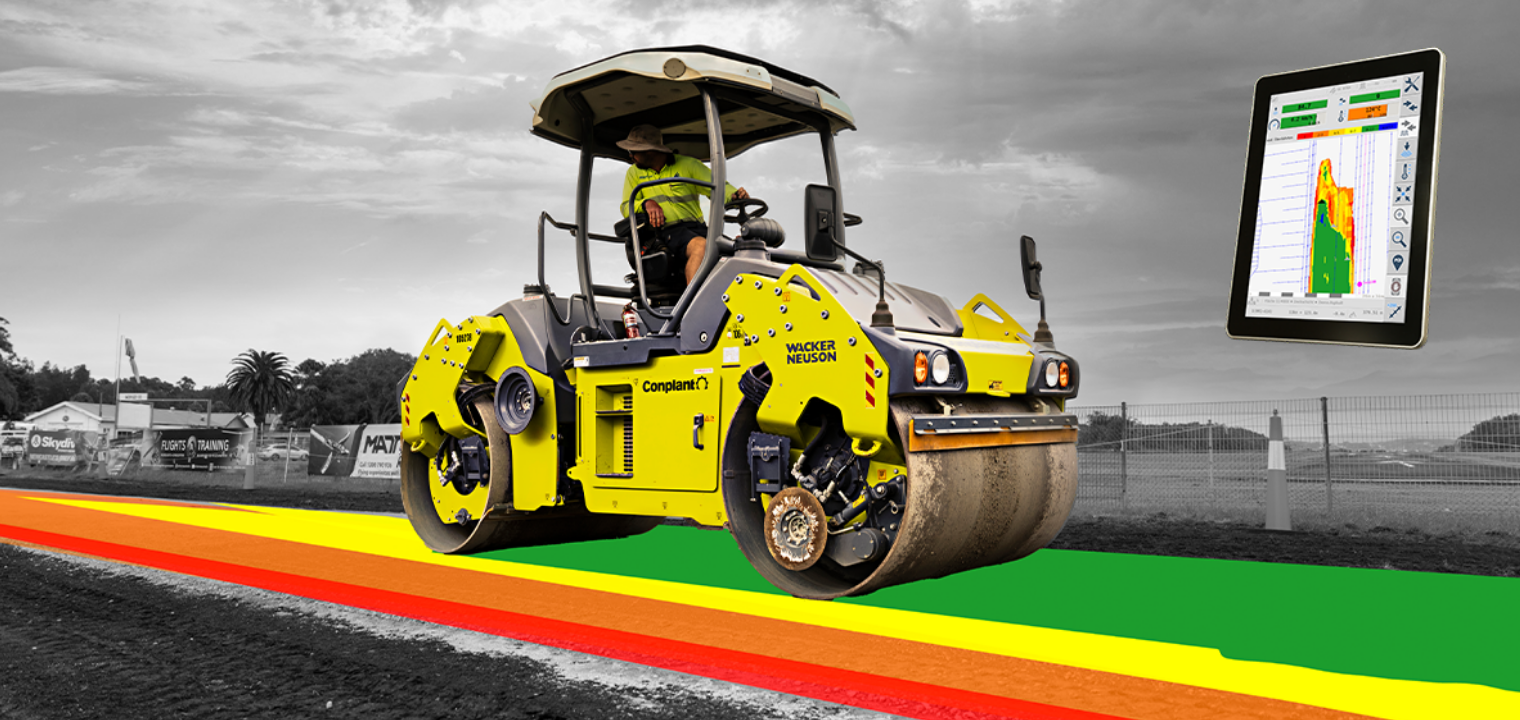
Technologies such as Völkel Intelligent Compaction provide operators with real-time information including pass counts, machine position and measured compaction values as work progresses. Instead of waiting until testing has been completed, operators can monitor coverage across the work area, identify sections requiring additional attention and build documented compaction records throughout construction.
Intelligent Compaction does not replace traditional testing. Rather, it complements established quality assurance practices by providing better information while decisions can still be made. The result is greater confidence that compaction activities are being carried out consistently before formal verification takes place.
Ultimately, better decisions rely on better information, and technology is increasingly helping contractors achieve both.
Looking Beyond Surface Compaction
Conventional rollers remain the appropriate solution for the vast majority of civil construction projects. When matched correctly to the material and operating conditions, they continue to deliver the compaction outcomes required for roads, subdivisions, commercial developments and general earthworks.
Some projects, however, require a different approach.
Deep uncontrolled fill, highly variable subsurface conditions, mining infrastructure and projects with demanding performance requirements may require ground improvement beyond the practical depth of conventional surface compaction.
In these situations, engineers have access to additional methodologies designed specifically for deeper treatment.
High Energy Impact Compaction (HEIC) and impact roller technology are examples of specialised ground improvement methods used where conventional rollers alone cannot achieve the required engineering outcome. Rather than replacing conventional compaction, they extend the range of available solutions when project conditions demand a different methodology.
Within Australia, Landpac Asia-Pacific specialises in High Energy Impact Compaction for infrastructure, industrial and mining projects requiring deeper ground treatment, while Broons Impact Rollers has spent decades developing impact roller technology capable of treating large areas more effectively than conventional surface compaction alone.
The important point is not that one methodology is superior to another. It is that modern compaction with many options available is increasingly about selecting the right methodology for the conditions encountered rather than expecting a single solution to suit every project.
What Good Compaction Looks Like
Good compaction is not defined by the number of roller passes completed or how quickly a section of work is finished.
It is reflected in the decisions made throughout the project.
Understanding the ground before work begins. Selecting equipment suited to the material being compacted. Adjusting methodology as site conditions change. Verifying the outcome through appropriate testing. Using technology where it adds value. Recognising when conventional compaction is appropriate and when specialised ground improvement techniques may deliver a better engineering outcome.
Collectively, these decisions influence the quality of the finished work far more than the rolling process alone.
Across the industry, contractors continue to improve outcomes through better planning, stronger quality assurance and greater use of technologies that provide improved visibility throughout construction. As projects become more demanding, the focus is shifting from simply achieving compaction to understanding the factors that contribute to achieving it consistently across the project.
Conclusion
Compaction remains one of the most important contributors to long-term infrastructure performance, yet the quality of the outcome is rarely determined by the roller alone.
It is shaped by the decisions made before construction begins, refined as conditions change and confirmed through effective verification.
The right equipment will always remain an essential part of the process. Equally important, however, is understanding when to use it, how to apply it and when a different methodology may be required.
As Australia’s civil construction industry continues to evolve, the projects that perform best over the long term are increasingly those where compaction is treated not simply as another construction activity, but as a quality-driven engineering process supported by informed decision-making from start to finish.