The conversation contractors are having about fleet ownership has changed considerably over the past decade. Ownership remains important, particularly for equipment that forms part of a business’s everyday operating capability, but the decision to purchase is being tested against a broader set of commercial considerations than it once was. Contractors are looking beyond the work immediately in front of them and asking whether demand will remain consistent enough to support that investment once the current project is complete.
This does not represent a retreat from ownership. It reflects a more deliberate approach to fleet planning in an industry where a strong pipeline does not always translate into predictable utilisation. Australia continues to invest heavily in transport, housing, utilities, energy and resources, yet the projects within that pipeline vary significantly in location, duration, scope and equipment requirements. A contractor may move from a long-term infrastructure package into several shorter civil projects or find that two project programmes overlap before demand falls away again. The overall volume of work may be substantial, but that does not mean every machine will remain equally productive across it.
After 19 years working with contractors through changing market conditions, one of the clearest trends I have seen is that fleet decisions are becoming less closely tied to business growth alone. Winning more work may still justify further investment, but it no longer follows automatically that every increase in demand should result in another permanent asset. Contractors are becoming more disciplined about separating the equipment they need consistently from the equipment they need because of a particular project, temporary peak or specialised requirement.
That distinction matters because fleet strategy now sits within a much wider industry focus on productivity. Research from CEDA found that multifactor productivity in construction has barely moved since the mid-1990s, while also highlighting the fragmented structure of the sector. According to its analysis, 98.5 per cent of Australian construction businesses employ fewer than 20 people, and 91 per cent employ fewer than five. The accompanying paper published through the 2025 ABS and RBA Conference argues that smaller firms often have less capacity to capture the benefits of investment, innovation and economies of scale.
Fleet ownership is only one part of that productivity challenge, and it would be overstating the case to suggest that changing how equipment is sourced could resolve broader structural issues across the industry. It does, however, place greater importance on the decisions individual businesses can control. For a contractor, equipment is not simply a project resource. It is a long-term commitment of capital, maintenance capacity and management attention, all of which continue well beyond the job that first justified the purchase.
Ownership Still Has a Clear Role
Where equipment is used consistently, ownership continues to make strong commercial sense. A core-owned fleet gives contractors direct control over availability, maintenance standards and the way machines are configured for their work. Operators become familiar with the equipment, servicing can be planned around established programmes, and the business is less exposed to availability constraints when projects commence or schedules change.
These benefits are particularly valuable when a machine can move reliably from one project to the next. Consistent utilisation allows the original investment to be spread across a longer period of productive work, while the operational knowledge built around the asset can improve planning and reduce disruption. For equipment that genuinely underpins the business, ownership is not only defensible; it is often the most practical and commercially sound approach.
The difficulty arises when a purchase is assessed against the demands of one project rather than the likely needs of the business over several years. A machine may be heavily utilised during the contract that prompted its purchase, but the more important test is what happens afterwards. If the following projects require different equipment, are delayed or do not proceed as expected, the asset can quickly move from being essential to being intermittently useful.
This is where the economics of ownership become more complex than the purchase price or finance repayment alone. Insurance, scheduled servicing, inspections, compliance obligations, depreciation and storage continue whether the machine is operating or waiting for work. None of these costs makes ownership inherently unattractive, but they do mean that utilisation has to be considered over the life of the asset rather than during its busiest period.
The industry’s wider productivity figures reinforce the need for that scrutiny. Master Builders Australia reported in February 2026 that ABS multifactor productivity data showed a seventh consecutive year of decline for building and construction, with productivity 21.5 per cent lower than it had been just over a decade earlier. Its response focused largely on regulation, investment and reform, but the underlying issue is equally relevant at a business level: construction is using more resources without achieving a corresponding increase in output.
A similar concern is visible in housing. Reporting on Productivity Commission findings, The Guardian noted that Australia was producing roughly half as many homes for each hour worked as it had 30 years earlier. Housing and civil construction are not interchangeable, and the pressures affecting each part of the industry differ, but the broader direction is difficult to ignore. Across construction, greater activity is not necessarily translating into greater efficiency.
For fleet managers, that creates a practical obligation to look beyond whether a machine can contribute to the work and consider whether it will contribute often enough to warrant ownership. Almost any additional machine can improve capacity under the right conditions. The stronger decision is identifying whether those conditions are likely to occur consistently enough to support the investment.
A Strong Pipeline Does Not Guarantee Consistent Demand
One of the reasons this decision has become more difficult is that project pipelines rarely translate neatly into equipment schedules. Contractors may have confidence in the overall volume of work ahead while still facing considerable uncertainty around timing, project mix and location. Approvals move, contract awards are delayed, weather affects programmes, and client priorities change. Equipment demand can rise quickly when several projects overlap, then reduce just as quickly once that work progresses into another phase.
Regional and metropolitan projects can also create very different fleet requirements. Equipment that is well suited to one operating environment may have a narrower role on the next job, while transport costs and mobilisation requirements can affect how efficiently owned assets move between regions. The issue is not whether the equipment remains capable, but whether the work available continues to align with that capability.
Building an owned fleet large enough to cover the highest possible level of demand can provide certainty during busy periods, but it can also leave a business carrying more capacity than it ordinarily needs. Conversely, keeping the fleet too lean can limit the ability to respond when several opportunities arise at once. The objective is therefore not simply to maximise ownership or minimise it. It is to establish a core fleet that reflects predictable demand while retaining a practical way to respond when actual demand moves beyond it.
That is why hire is increasingly being considered at the planning stage rather than only after a shortage occurs. For many contractors, it has become the mechanism that allows the owned fleet to remain focused on consistently productive assets while still preserving the ability to take on additional work, respond to programme changes or access equipment that may not have a long-term role in the business.
Hire Has Become a Fleet Strategy, Not a Contingency Plan
For many years, hire largely sat outside long-term fleet planning. It was there when a machine broke down, when another project was awarded unexpectedly or when additional capacity was needed to meet a deadline. Once that demand passed, the expectation was that the business would return to relying on its own fleet.
Increasingly, that’s no longer the case.
Contractors are becoming more deliberate about where ownership creates long-term value and where flexibility provides the stronger commercial outcome. Rather than treating hire as a fallback option, many are recognising it as a practical way of managing the variability that has become part of modern project delivery.
This isn’t because ownership has become less valuable. If anything, the opposite is true. By limiting ownership to equipment that consistently supports the business, contractors can have greater confidence that those assets will continue generating value over many years. Hire then complements that investment by providing access to additional capacity when workloads move beyond the capability of the core fleet.
That distinction is important because very few contractors experience perfectly consistent demand.
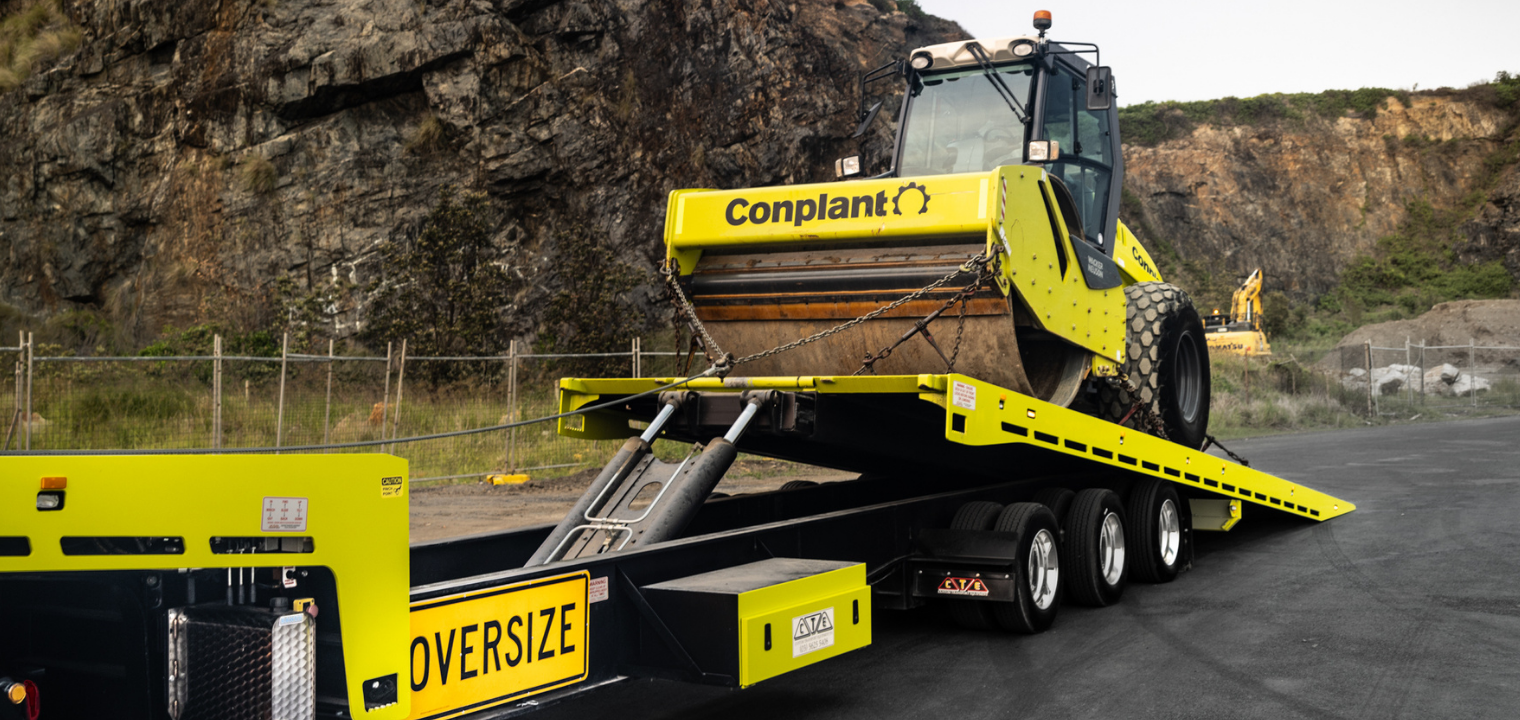
A business may spend six months delivering a major infrastructure package requiring several rollers before moving onto subdivision works where only a portion of that equipment is needed. Another may secure two projects within weeks of each other, creating a temporary demand that simply doesn’t exist for the remainder of the year. Neither situation necessarily justifies purchasing additional machines, yet both require contractors to respond quickly if programmes are to remain on track.
Building flexibility into a fleet allows businesses to respond to those changing conditions without assuming every increase in demand should become a permanent investment.
Specialist Equipment Doesn't Always Need to Be Owned
The same principle applies to specialised equipment.
Most contractors have machines that form the backbone of their operations because they’re used consistently across a broad range of projects. Others may only become relevant under particular site conditions, specific client requirements or larger project scopes.
Owning equipment that is only required occasionally can be difficult to justify, regardless of how valuable it may be while it is working. Every business reaches a point where the frequency of use simply doesn’t support permanent ownership.
Hire provides a practical alternative.
Rather than committing capital to equipment that may spend extended periods between projects, contractors can access the capability when it is genuinely required while keeping investment focused on the assets that deliver the greatest long-term return.
The same thinking increasingly applies to technology.
Construction equipment has evolved considerably over the past decade, with advances in telematics, machine control, safety systems and digital reporting becoming part of everyday project delivery. Those developments continue to influence purchasing decisions, particularly as clients place greater emphasis on documentation, productivity reporting and operational transparency.
For some contractors, hiring newer equipment also provides an opportunity to understand how those technologies perform in practice before making a longer-term investment. It allows businesses to evaluate whether the additional capability genuinely improves project delivery rather than assuming every technological advancement warrants immediate ownership.
A Better Balance Between Ownership and Hire
There is a tendency to frame ownership and hire as competing approaches.
In reality, they solve different problems.
Ownership provides certainty where demand is predictable. It gives contractors confidence that the equipment underpinning their operations will always be available and allows them to build familiarity, maintenance programmes and operational consistency around those assets.
Hire provides flexibility where certainty doesn’t exist.
It allows businesses to respond to project peaks, changing programmes, specialist requirements and unexpected opportunities without permanently increasing the size of the fleet. Rather than replacing ownership, it protects it by ensuring core investments remain focused on the equipment that is consistently productive.
Increasingly, this balance is becoming one of the defining characteristics of successful fleet management.
Research from Oxford Economics identifies improved project delivery, technology adoption and more effective use of capital as critical to lifting productivity across Australia’s construction industry. While those challenges extend well beyond fleet management, they reinforce an important point. Contractors are under increasing pressure to ensure every investment contributes to stronger business performance, not simply greater capability.
Fleet strategy has become part of that conversation.
Looking Ahead
The construction industry is unlikely to become less complex over the coming decade.
Project pipelines will continue to fluctuate, technology will continue to evolve, and businesses will remain under pressure to improve productivity while managing rising costs and changing client expectations. The contractors that adapt most successfully are unlikely to be those that simply own the most equipment or rely entirely on hire. They will be the businesses that understand the role each plays within a broader fleet strategy.
Ownership will always remain fundamental to the industry. A well-planned core fleet provides certainty, operational control and long-term value that cannot easily be replicated.
Equally, hire has matured beyond being a short-term solution to an unexpected problem. It has become a strategic tool that allows contractors to respond to changing project demands without compromising the productivity of their owned fleet or committing capital where long-term utilisation remains uncertain.
Perhaps that is the most significant shift in fleet strategy over the past decade.
The conversation is no longer centred on whether contractors should own equipment or hire it.
It is centred on understanding which approach creates the greatest value for each investment.
The businesses making those decisions well are not necessarily building larger fleets.
They are building more deliberate ones.
If you’d like help assessing where hire equipment could strengthen your existing fleet strategy, get in touch with the Conplant team today.