Rework is one of the most familiar problems in civil construction, but it is not always recognised when it first begins. It may start with an incorrect level, a layer placed before the material below has been verified, a service location that does not match the information available to the crew, or a roller that is poorly suited to the application.
Once further work progresses over the affected area, the consequences become harder and more expensive to contain. What began as a relatively small issue can consume additional labour, plant, materials and fuel, disrupt following activities and introduce new safety risks as crews return to an area that was considered complete.
Table of Contents:
Why Rework Is Often Underestimated
Where Rework Occurs on Civil Projects
How Contractors Are Reducing Rework
What Is Rework?
In civil construction, rework is work that must be corrected, removed, rebuilt or repeated because the original result does not meet the required design, specification, quality or functional outcome.
The task itself may be relatively contained, such as reconditioning and recompacting a section of fill, reopening a trench or reworking a pavement layer after testing identifies a nonconformance. However, civil work is sequential. An issue missed at one stage can be carried into the next, making correction more disruptive as work progresses.
Why Rework Is Often Underestimated
Not every instance of repeated work is preventable. Previously unidentified ground conditions may require a different treatment, a client may change the scope, or a design may be revised as new information becomes available. These situations reflect the uncertainty and development that are part of civil construction.
Avoidable rework is different. It commonly arises when information is incomplete or outdated, responsibilities are unclear, activities occur in the wrong sequence, equipment is unsuitable for the application, execution is inconsistent, or work progresses before the required verification has taken place.
The wider productivity picture suggests these issues are not always being captured. Infrastructure Australia’s 2025 Infrastructure Market Capacity Report found that only 8 per cent of surveyed firms measured rework as part of their productivity metrics. The report also identified quality inconsistencies and coordination difficulties among the common challenges experienced when managing subcontracting arrangements.
Australian research has examined the causes and costs of rework for decades, including studies of construction rework and civil infrastructure projects. While figures from older studies should not be treated as current benchmarks, their central finding remains useful: rework is often connected to systems and decisions across a project, rather than one isolated mistake at the point of construction.
Recognising that distinction helps project teams focus on the conditions they can control. The objective is not to eliminate every change, but to reduce the number of preventable issues that are allowed to move into later stages of work.
Where Rework Occurs on Civil Projects
Ground preparation
The early stages of a project often carry the greatest uncertainty. Geotechnical investigations provide essential information, but excavation and stripping can expose variation between the locations investigated.
Rework can begin when unsuitable material is not identified or removed, uncontrolled fill is treated as consistent, proof rolling is rushed, or moisture variation is not addressed before placement and compaction continue. Material that performs adequately in one area may behave differently nearby because its composition, moisture condition or underlying support has changed.
The practical response is to make that variability visible early by observing exposed material, confirming the suitability of imported fill, managing moisture and undertaking required testing. Once more layers, services or pavement have been constructed, the same issue becomes far more difficult to address.
Compaction and pavement construction
Compaction can become a source of rework because the finished surface may look acceptable even when the required result has not been achieved through the layer.
Material, moisture, lift thickness, machine type, drum configuration, rolling speed, pass pattern and the number of passes all influence the outcome. More passes alone will not correct a method or machine that is poorly matched to the application.
Equipment selection therefore needs to reflect the material, specification and site conditions. Cohesive soils generally require a different compaction action from granular materials, while asphalt introduces requirements around temperature, rolling sequence and machine combination. Access, working width, nearby structures and vibration restrictions may also affect the choice.
Conplant’s guide to choosing rollers for road compaction provides an overview of where different roller types fit. On site, however, verification through the project’s required testing, survey checks and hold points is what confirms whether the outcome has been achieved.
Survey, drainage and services
Survey errors can affect earthworks quantities, drainage grades, pavement thicknesses and the location of structures or services. The risk increases when teams are working from different revisions or changes made in one part of the project are not reflected in the information used elsewhere. Machine control can improve accuracy, but it cannot correct an outdated model or incorrect calibration.
Drainage and services present similar coordination risks. Rework can result from excavating before existing services are properly located, installing drainage before related levels are confirmed, or backfilling before inspection and testing are complete.
Adjusting a service in an open trench is relatively straightforward compared with reopening an area that has been backfilled, compacted and covered by pavement. Current information, clear inspection points and checks before work is concealed remain some of the most effective controls.
How Contractors Are Reducing Rework
Planning the construction method
Planning is most valuable when it tests how the design will actually be built.
Constructability reviews can identify access constraints, sequencing conflicts, testing requirements and equipment limitations before they affect production. Inspection and test plans can establish where work must stop for verification and who can release it.
Equipment requirements should also be considered across the different stages of work. Treating open earthworks, confined areas and changing materials as one general compaction requirement increases the chance that the machine available on the day will drive the method.
Engineers Australia’s work on improving infrastructure productivity reinforces the value of coordinated planning. At site level, the principle is practical: resolve what can be resolved before labour, plant and materials are committed.
Keeping teams aligned
Many rework events occur at the boundaries between responsibilities. A survey may be based on an earlier revision. An operator may not know that material conditions have changed. A testing trend may not reach the crew working the next lot.
Reducing these gaps requires current information, clear responsibilities and a direct way to raise discrepancies. Prestarts should identify changes affecting the day’s work, while supervisors, operators, surveyors and quality teams need a shared understanding of the required method and hold points.
Digital systems can support that process, but they do not replace the basic discipline of confirming that people are working from the same information.
Matching equipment to the application
Equipment cannot compensate for unsuitable material or an incorrect design, but it directly influences whether the construction method can be executed consistently.
Selection should begin with the work: the material, lift thickness, required outcome, available space, site restrictions and production needs. This is where a compaction specialist can contribute practical equipment knowledge without assuming the responsibilities of the contractor, designer or geotechnical team.
Access to a broad compaction hire range allows the machine mix to change as a project progresses. This can be useful when specialised equipment is required for one stage, multiple workfronts open at once or conditions make the original selection less suitable. It reduces the pressure to continue using a machine simply because it is already owned or on site.
Availability, transport and service support also affect whether the planned method can be delivered when the workfront is ready. Considering them early gives the project greater control over sequencing and downtime.
Verifying work as it progresses
End-of-project inspection is too late to be the main defence against rework. Verification is more effective when it follows the construction sequence and confirms work before it is concealed or carries another layer.
Depending on the specification and quality plan, this may include survey checks, density and moisture testing, proof rolling, visual inspections, material records and signed hold points.
The results can also refine the method. Inconsistent density near edges or changes in material may prompt a review of lift thickness, moisture, access, roller pattern or machine choice. Used this way, quality assurance helps identify where a different response is required.
Technology Is Improving Visibility
Technology is helping project teams see developing issues earlier, particularly across large sites where inspections and spot tests provide important but localised information.
Machine control and GPS guidance can help operators follow design surfaces and manage levels. Digital QA systems can connect records, photographs, test results and approvals to a location and time, reducing reliance on fragmented or superseded information.
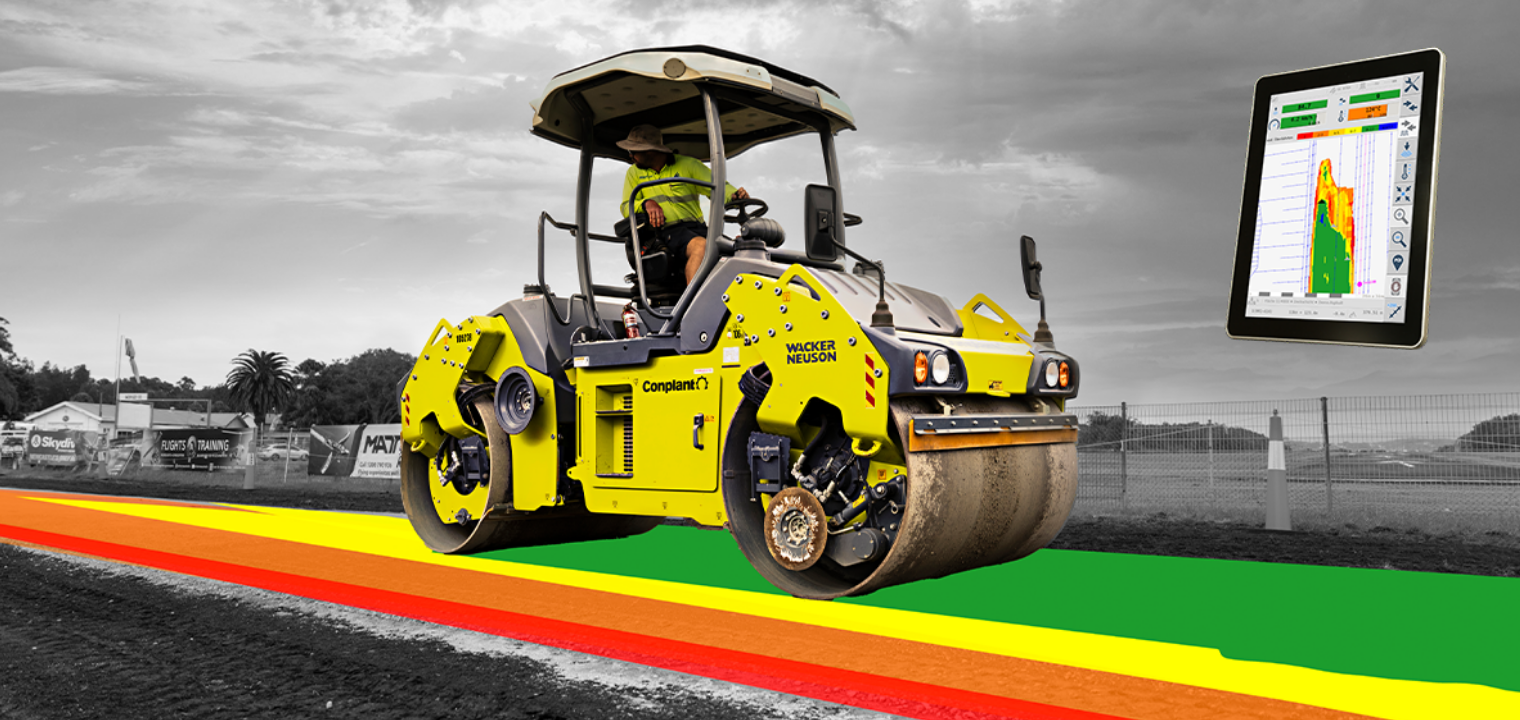
In compaction, Völkel Intelligent Compaction displays information such as coverage, pass count, machine position and rolling behaviour. This can help operators and supervisors identify missed areas, unnecessary overlap, inconsistent speed or sections responding differently from the surrounding work.
The technology does not replace acceptance testing, geotechnical interpretation or experienced judgement. Machine response is influenced by the material, moisture, layer thickness and underlying conditions, while any digital system depends on accurate models, calibration and inputs. Its value lies in providing earlier and more complete information for people to interpret and act on.
Getting More Work Right the First Time
Processes and technology will only go so far if the site culture rewards progress at any cost. Operators and crews are often the first to notice that conditions do not match the plan. They need to be able to report a material change, question a level or clarify an instruction without being treated as though they are creating a delay.
Finding a problem before the next layer is placed may interrupt production in the short term, but it is evidence that the quality system is working. A productive quality culture supports this by explaining the reasons behind construction methods, reviewing nonconformances for recurring patterns and using rework records to identify problems in information, sequencing, communication, equipment selection or verification.
Rework will never disappear from civil construction. Designs change, ground conditions vary and projects bring together many organisations, disciplines and work methods. Much of its disruption can still be reduced when teams are encouraged to raise issues early and the information gathered is used to improve the system rather than assign fault.
Getting work right the first time is not one decision. It is a series of ordinary decisions, supported by the right culture and made early enough to matter.