Ask how many roller passes are needed for proper compaction, and the honest answer is: it depends.
That is not avoiding the question. It reflects how compaction works.
Pass count is established for the material, layer, roller configuration and acceptance criteria applying to the work. A number taken from another project, or even another section of the same project, has limited value unless those conditions are comparable.
This is why project specifications generally treat pass count as one part of a broader compaction procedure. The number records the application of compactive effort. Testing confirms the result.
Table of Contents:
Lift Thickness and Supporting Conditions
Roller Configuration and Operating Parameters
Establishing the Pass Count Through a Test Strip
When Additional Passes Stop Adding Value
Pass Count Is Not an Acceptance Result
How Intelligent Compaction Supports Pass Control
What Counts as a Roller Pass?
For the purpose of this article, one pass is one trip by the roller over a defined strip of material in one direction. An out-and-back movement over the same strip therefore represents two passes.
Terminology can vary between projects. Some rolling plans treat the complete return cycle as one pass. The important point is that the definition remains consistent across the rolling procedure, operator records and quality documentation.
Why Roller Pass Count Varies
The same number of passes can produce different results because the response is controlled by more than the roller travelling over the surface.
Material characteristics, moisture or temperature, lift thickness, underlying support, roller mass, drum or tyre configuration, vibration settings, speed and coverage pattern all affect the compactive effort delivered and the way the layer responds.
A pass count is therefore only meaningful when it remains connected to the conditions under which it was established.
Material and Moisture
Cohesive soil, granular pavement material and asphalt require different combinations of compaction equipment and operating parameters.
For cohesive and semi-cohesive soils, the rolling pattern is influenced by plasticity, moisture condition, lift thickness and the kneading action of the padfoot drum. Padfoot drums can also assist with aerating moisture-heavy material and knitting successive lifts together, helping to reduce distinct interfaces between layers. Where the material moves, pumps or ruts under load, additional passes are unlikely to deliver the intended improvement until the material condition is addressed. Granular materials respond according to grading, particle shape, moisture and the support provided by the underlying layer. Smooth drum vibration settings, operating mass and speed all influence the result achieved with each pass.
Asphalt pass count is tied to the rolling train, mat temperature, mix behaviour and the timing of each compaction stage. Breakdown, intermediate and finish rolling each have their own function, operating window and pass requirements within the overall rolling pattern. A pattern developed for earthworks or granular pavement has no direct application to asphalt, even where the nominal number of passes appears similar.
Material variability also matters. A rolling pattern established across a consistent trial section may need to be reconsidered where moisture, grading or ground response changes across the work area.
For further discussion of moisture and ground response, see our guide to wet-weather compaction.
Lift Thickness and Supporting Conditions
Lift thickness determines the depth through which the selected roller must deliver effective compactive effort.
Where a lift exceeds the effective working depth of the machine and configuration, the surface may appear well compacted while the lower portion of the layer remains below the specified result. Increasing the surface pass count does not necessarily change that outcome.
The response of the underlying layer also influences the pass requirement. Uniform support allows the placed material to respond more consistently, while weak, wet or variable ground can affect both roller behaviour and measured results.
For this reason, lift thickness and underlying support form part of the basis for selecting the roller and establishing the rolling pattern. They are not separate considerations applied after a pass count has been chosen.
Roller Configuration and Operating Parameters
Drum type, operating mass, width, amplitude, frequency, ballast, tyre pressure and travel speed influence the effort applied during each pass. On vibratory rollers, amplitude influences the depth and intensity of the compactive effort, while frequency and travel speed together affect the spacing and rate of drum impacts.
A heavier roller does not automatically reduce the number of passes or improve the result. The machine still needs to suit the material, lift and supporting conditions. Similarly, two rollers of comparable operating mass may produce different outcomes because their drum configuration, vibration system or contact characteristics differ.
Coverage also affects the meaning of the recorded pass count. Direction, overlap, edges, turning areas and interfaces influence whether the nominated pattern has been applied evenly across the work area.
Where the production roller or its configuration differs from the machine used to establish the rolling pattern, the original pass count cannot automatically be assumed to deliver an equivalent result.
Our guide to using compaction rollers provides further information about equipment selection and general roller operation.
Establishing the Pass Count Through a Test Strip
A project specification may nominate a rolling procedure or require one to be established through a test strip or trial section.
Where a trial section is used, the material, lift, roller and operating parameters are assessed together under representative conditions. Testing at defined stages shows how the layer responds as passes are added and whether further compactive effort continues to produce a measurable improvement.
The resulting procedure records the conditions under which the pass count was established, including the material condition, lift thickness, roller configuration, speed, vibration settings and pass sequence. The value of the trial is not the pass count alone, but the verified combination of conditions and equipment associated with it.
Specifications apply this principle differently across general earthworks, pavement materials and rock fill. Transport for NSW D&C R44 provides one example through its requirements for rock fill trial sections. The documented compaction procedure includes material and moisture conditioning, plant specifications, number of roller passes, roller speed and vibration frequency. Although these requirements are specific to rock fill, they demonstrate why pass count must be considered alongside the material, equipment and operating parameters.
When Additional Passes Stop Adding Value
Compactive response does not necessarily continue increasing at the same rate with every pass. Early passes may produce a measurable improvement, followed by progressively smaller gains as the material approaches the result achievable under the existing conditions.
Where the measured response has plateaued, increasing the pass count may add time without delivering meaningful improvement. On crushed rock, excessive vibratory passes can contribute to particle breakdown, alter the grading and generate additional fines. In cohesive soils, particularly where moisture is high, continued rolling can also shear or disturb material that has already been compacted, potentially reducing the achieved density. Rutting, pumping, shoving or surface breakdown can indicate that the material condition, underlying support or roller configuration may warrant review. These observations provide useful operational information, but they do not replace the acceptance method nominated in the project specification.
Pass Count Is Not an Acceptance Result
Completing the nominated passes confirms that the documented rolling pattern has been applied. It does not, on its own, confirm that the specified compaction result has been achieved.
Acceptance remains governed by the project specification and nominated testing requirements, whether based on in-situ density, relative compaction, stiffness or another specified measure. Pass count records the process applied; testing assesses the result.
Our article on the ideal level of soil compaction provides further context on maximum dry density, moisture and project compaction targets.
How Intelligent Compaction Supports Pass Control
Spot testing provides detailed information at selected locations. Intelligent compaction adds continuous information about the rolling process across the work area.
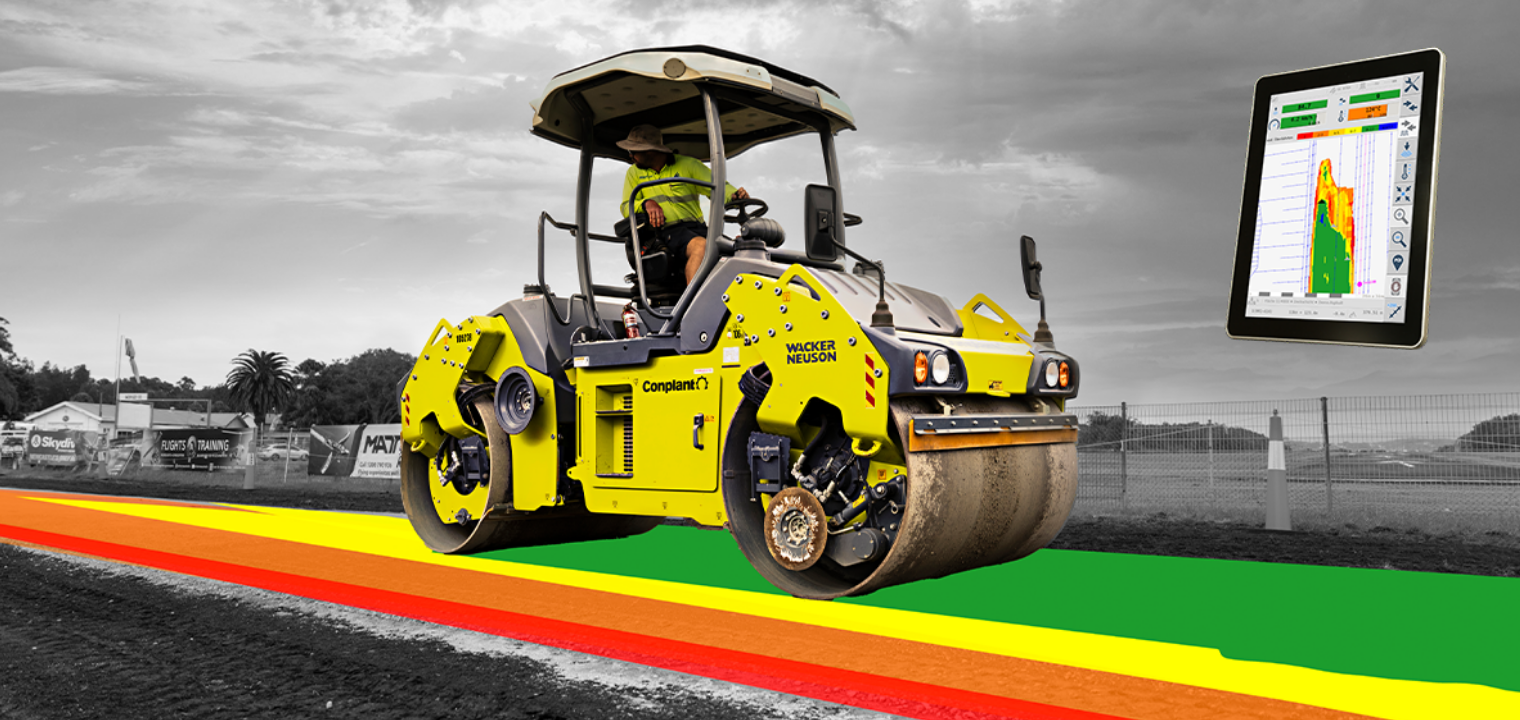
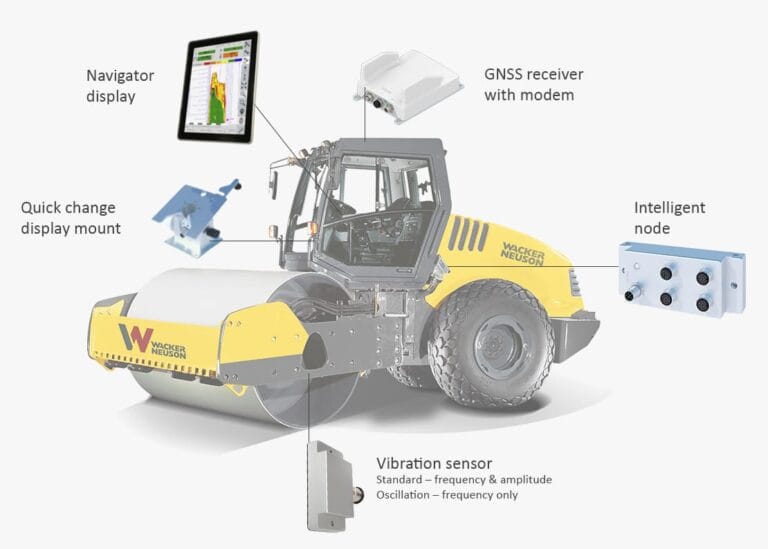
Conplant offers Völkel intelligent compaction systems that combine machine-position data with roller-mounted sensors. Pass count and recorded ground response are displayed against location, providing visibility of coverage and variations across the treatment area.
For asphalt applications, temperature information can also be displayed with the machine position and pass data. This allows the rolling record to be considered alongside the conditions present when the work was completed.
The system can help identify missed areas, inconsistent pass coverage and sections where the recorded response differs from surrounding material. It also provides a more complete record of the rolling process than pass counts recorded without spatial reference.
Intelligent compaction does not directly measure density and does not automatically replace project acceptance testing. Where the specification permits and an appropriate correlation has been established, its data may contribute to the wider verification process. Otherwise, it supports coverage control, consistency and documentation alongside the specified testing regime.
Matching the Roller to the Work
Pass count cannot be separated from the machine used to complete the work. A rolling pattern established with one roller cannot automatically be transferred to another with a different operating mass, drum or tyre configuration, vibration system or compaction technology.
Conplant has specialised in compaction equipment since 1961 and offers Australia’s widest range of compaction equipment. That experience allows us to help customers identify a roller suited to the material, planned lift and working conditions without stepping into the project’s engineering, testing or acceptance requirements.
When requesting roller hire, provide the material type, planned lift depth, project specification and relevant site conditions. Our team can help identify suitable equipment and discuss Völkel intelligent compaction options for pass mapping, ground response and compaction documentation.
Contact our team for a roller hire quote for your next project.
Frequently Asked Questions
Is there a standard number of roller passes for proper compaction?
No. The applicable pass count depends on the material, lift, roller configuration, operating parameters and project acceptance criteria.
What counts as one roller pass?
In this article, one pass means one trip by the roller over a defined strip in one direction. Project terminology may differ, so the applicable rolling procedure should define how passes are counted.
How is the required roller pass count determined?
The pass count may be nominated by the project specification or established through a test strip or trial section using representative material, layer and machine conditions. Where a trial is required, testing determines which repeatable rolling pattern achieves the specified result.
Can additional roller passes improve compaction?
Additional passes may improve the result while the layer continues to respond to the applied compactive effort. Where the measured response has plateaued or the material is unstable, more passes may provide little benefit and can contribute to rework or material disturbance.
Does intelligent compaction replace density testing?
Not automatically. Intelligent compaction provides continuous pass, position and ground-response information. Acceptance testing remains subject to the project specification unless an approved alternative or correlation applies.
How is proper compaction confirmed?
Proper compaction is confirmed using the testing and acceptance criteria nominated in the project specification. Pass count documents the process but is not, on its own, proof of conformity.