When people talk about Brisbane 2032, the conversation usually centres on what the Games will bring to Queensland.
New infrastructure, improved transport networks, increased investment and the economic opportunities associated with hosting an event of this scale all form part of that discussion. These outcomes are important, but they are only one part of what is now unfolding across Queensland’s construction industry.
After 19 years with Conplant, including many years working with contractors and project teams across the country, I have seen the industry move through different periods of growth, uncertainty and changing demand. Over the past year, however, I have noticed a shift in the conversations taking place with contractors, project managers and procurement teams.
Equipment remains part of the discussion, as it always has, but the focus is increasingly broader than an individual project or an immediate machine requirement. More conversations are beginning earlier and extending into workforce availability, equipment lead times, future project schedules and the practical challenge of securing the resources needed to deliver work in an increasingly busy market.
Some businesses are reporting longer wait times for products and services than they would have expected only a few years ago. Others are looking beyond their traditional supply networks, sourcing materials, equipment or specialist capability from interstate to keep projects moving. At the same time, housing affordability, inflation, interest rates and broader economic uncertainty continue to shape confidence across different parts of the market.
None of these issues exists because of Brisbane 2032. Many were already emerging long before Olympic infrastructure entered the discussion.
Yet as the scale of Queensland’s future project pipeline becomes clearer, the Games provide a useful lens through which to view a much broader question. Not whether Brisbane can deliver the Olympics, but whether Queensland’s construction industry has the capacity to deliver everything being asked of it over the next decade.
That, in my view, is where the more important discussion begins.
The Olympics Aren’t The Only Thing Being Built
One reason Brisbane 2032 has become such a focal point is that it gives the industry something tangible to point to. The Games have a fixed deadline, the venues are visible, and the investment is public. It is easy to look at that activity and assume it is the primary driver behind the pressure now being discussed across Queensland construction.
I am not sure that is entirely accurate.
What Brisbane 2032 has done is draw attention to a broader reality. Queensland was already entering one of the most significant periods of infrastructure and construction activity in its history before Olympic projects became a major part of the discussion.
The 2025 Queensland Major Projects Pipeline Report forecasts $127.5 billion in engineering construction activity over the next five years, an increase of 22.7 per cent from the previous year. Of that total, $120 billion sits outside Games infrastructure.
That distinction matters. The Olympic and Paralympic Games are adding to the pipeline, but they are not its defining component.
Transport infrastructure, energy projects, utilities, defence, resources developments and public infrastructure are all contributing to the volume of work ahead. Roads and bridges alone account for $19.2 billion in funded projects through to 2029–30, with the sector recording the largest increase in funded activity in the latest report. Investment in the Bruce Highway Upgrade Program is a major contributor, but it sits alongside road and transport work across Brisbane and regional Queensland.
For those of us working within the civil construction and equipment industries, this is not an abstract set of figures. Roads, bridges, transport corridors, utilities and major developments all require people, materials, plant and specialist capability. Many will be delivered concurrently, often by contractors drawing from the same workforce and supply networks.
If the challenge facing Queensland were limited to delivering Olympic venues, the discussion would be relatively straightforward. The reality is that Games projects are arriving at the same time as major transport programs, energy transition projects, housing commitments and infrastructure required to support continued population growth.
Each of these priorities is legitimate. Each requires investment. Each also draws upon many of the same resources required to deliver the others.
The Queensland Major Contractors Association describes the current pipeline as a sustained decade of opportunity rather than a short-term peak. At the same time, its reporting identifies competition for labour, plant, machinery, equipment and materials as a significant risk to delivery.
Those concerns are not being raised because Queensland lacks work. They are being raised because of the volume of work already sitting in front of the industry.
Capacity Is Emerging As The Defining Issue
When looking at the years ahead, demand initially seems like the obvious measure of industry strength. Major transport projects continue to move forward, renewable energy investment is expanding, housing remains a priority, and Olympic infrastructure is moving from planning towards delivery.
The more closely I look at the pipeline, however, the harder it becomes to argue that demand is the central issue. Queensland has no shortage of projects. What feels different today is the growing recognition that many of those projects will be drawing from the same pool of labour, expertise, materials and equipment at the same time.
The challenge is no longer simply generating work. It is ensuring the industry has the capacity to deliver it.
The latest Construction Skills Queensland (CSQ) Horizon 2032 report forecasts that Queensland’s construction pipeline will increase from approximately $60 billion in 2025–26 to a peak of $75 billion in 2027–28. Average construction labour demand is expected to rise from around 126,600 workers to approximately 148,300 over the same period.
If current industry capacity trends continue, CSQ projects an average shortfall of approximately 19,100 workers across the seven years to 2031–32, with the gap potentially reaching 35,000 workers in 2027–28.
These figures do not suggest that every project will move forward exactly as currently planned, nor do they predetermine whether Queensland will succeed or fail. Forecasts inevitably change as projects are funded, delayed, redesigned or re-sequenced. What they demonstrate is the extent to which multiple areas of construction are expected to exert pressure on the industry simultaneously.
The same workforce supporting Olympic infrastructure will also be required across residential and non-residential buildings, transport, utilities, renewable energy, mining and heavy industry. CSQ identifies earthmoving plant operators, concreters, construction managers, civil engineering professionals and a broad range of trade and labour roles among the occupations facing sustained demand.
This is where the capacity question becomes more practical. A project may have funding, approval and a defined program, but it still relies on the availability of the people and resources required to complete the work. When several sectors expand at once, having work available is not the same as having the capacity to deliver it efficiently.
Housing Is Part Of The Same Capacity Challenge
Housing is often discussed separately from major infrastructure, but that separation is more administrative than practical.
Queensland’s growing population requires more homes, but it also requires roads, schools, hospitals, utilities and transport infrastructure. These different forms of construction do not operate within completely isolated labour markets or supply chains. They often rely on overlapping trades, contractors, supervisors, engineers, plant operators and materials.
The Horizon 2032 analysis forecasts a robust building pipeline through to 2031–32, with residential and non-residential activity remaining major sources of workforce demand. At the same time, engineering construction is expected to grow through continued investment in transport, electricity, mining and heavy industry.
This makes housing relevant to the Brisbane 2032 discussion, even though housing delivery is not the subject of the Games program itself.
The question is not whether housing should take priority over infrastructure, or whether Olympic projects should be judged against residential construction. The issue is how Queensland manages several legitimate priorities when each depends, to varying degrees, on the same finite pool of industry capacity.
That pressure is likely to be felt differently across the market. Large infrastructure contractors may have greater workforce depth and purchasing power, while smaller civil contractors and subcontractors may be more exposed to fluctuations in labour, equipment and material availability. Regional projects may face different constraints again, particularly where specialist resources need to be mobilised over long distances.
The effect will not necessarily be a simple shortage across every part of the industry. It is more likely to appear through longer lead times, rising competition for particular skills, pressure on project sequencing and less flexibility when unexpected requirements emerge.
Capacity Extends Beyond Workforce Numbers
Workforce availability is understandably at the centre of the current discussion, but industry capacity cannot be measured through labour alone.
Projects also depend on materials, equipment, maintenance capability, transport, specialist suppliers and the systems that allow those resources to be deployed effectively. A workforce can only deliver what the broader supply chain is prepared to support.
The Queensland Major Projects Pipeline Report anticipates increasing demand across plant, labour, equipment and machinery over the coming decade. It also identifies potential pressure on aggregates, concrete and steel, all of which are fundamental to the delivery of civil and infrastructure projects.
From Conplant’s position within the equipment industry, this broader capacity question is already influencing conversations.
Historically, many equipment discussions began once the project scope and program were established. A contractor knew what work was coming, identified the plant required and approached the market to secure it. That process still occurs, but on larger or more complex projects, we are increasingly seeing those conversations begin earlier.
Contractors want to understand what equipment will be available, where it will be located, how quickly additional machines can be mobilised and what support can be provided if project requirements change. They are also looking more closely at whether equipment should be hired for the duration of a project, purchased to support longer-term fleet requirements, or drawn from a combination of owned and hired fleet.
These are not simply purchasing decisions. They are capacity decisions.
When workloads overlap, securing the right machine is only one part of the requirement. Contractors also need confidence that equipment can be serviced, supported and returned to work quickly. A machine that is technically available but cannot be mobilised to the required location, maintained through the project or replaced when circumstances change does not provide the same practical capacity.
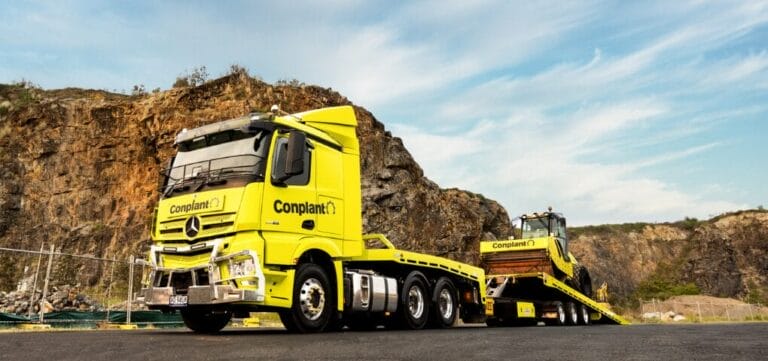
This becomes particularly important in civil construction, where project conditions and equipment requirements can change as work progresses. Weather, site access, material conditions, revised programs and interactions with other contractors can all affect the type and number of machines required.
In a quieter market, additional equipment can often be sourced once that need becomes apparent. In a market carrying sustained activity across multiple sectors, the same flexibility cannot always be assumed.
Productivity Becomes More Important When Capacity Is Constrained
A conversation about construction capacity can easily become a conversation about simply adding more resources. Queensland will need more skilled people, and continued investment in training, apprenticeships and workforce participation will be essential. Skilled migration may also form part of the response.
However, workforce growth alone is unlikely to address the full scale of the challenge.
When labour, equipment and materials are all under pressure, the industry must also consider how effectively its existing resources are being used. This brings productivity, equipment utilisation, project coordination and procurement into the same discussion.
For contractors, that may involve looking more closely at whether equipment is being matched correctly to the work, whether project schedules create avoidable periods of inactivity and whether fleet is being retained on one project while another site faces a shortage. It may also require earlier decisions about specialist equipment that cannot be secured at short notice.
Technology has a role to play, particularly where it can improve visibility, reduce rework or help project teams make better-informed decisions. However, productivity is not created through technology alone. It depends on how people, equipment, information and project planning work together.
The Queensland Infrastructure Productivity and Workforce Roadmap recognises this broader challenge. Its objectives include enhancing workforce and industry productivity, growing a more diverse workforce, supporting innovation and easing market capacity constraints.
Those areas are closely connected. Better planning cannot eliminate a workforce shortage, but it can reduce the extent to which limited resources are lost through late procurement, avoidable downtime or poorly sequenced work. Equipment cannot replace the expertise required to deliver a project, but the right equipment, supported properly and used effectively, can improve what the available workforce is able to achieve.
That distinction will matter as Queensland’s project pipeline grows.

Earlier Conversations Will Shape Delivery
After many years working across equipment hire and capital sales, one of the clearest changes I see is that availability is becoming part of project planning much earlier.
This does not mean every contractor needs to lock in equipment years before work begins. Project programs change, tenders are won and lost, and requirements cannot always be predicted with certainty. It does mean that relying on the market to respond immediately once every requirement is confirmed may become increasingly difficult during peak periods.
Earlier engagement gives contractors and suppliers more opportunity to understand likely demand, identify where the fleet may need to be positioned and plan around projects with overlapping schedules. It also creates space to consider whether a hire, purchase or mixed-fleet approach is best suited to the expected duration and utilisation of the equipment.
For suppliers, the responsibility extends beyond holding more machines. Fleet investment must be supported by trained service personnel, parts availability, transport capability and a clear understanding of where demand is likely to develop. Expanding equipment numbers without the ability to support them does not resolve the underlying capacity problem.
There is also a limit to how far any individual business can plan. Contractors depend on clearer project sequencing and procurement timelines from clients and the government. Suppliers depend on contractors having enough visibility to discuss future requirements. Training providers need confidence about the occupations and regions where demand will emerge.
The industry is interconnected. Delayed decisions in one part of the chain reduce the time available for everyone else to respond.
That is why the years leading to Brisbane 2032 should not be viewed only through the number of projects announced or the value of investment committed. The quality and timing of the decisions surrounding those projects will be just as important.
Looking Beyond 2032
Brisbane 2032 presents a significant opportunity for Queensland. Investment in venues, transport infrastructure and supporting projects has the potential to create benefits that extend well beyond the Games themselves.
The challenge and the opportunity are inseparable.
The same pipeline that supports economic growth will place pressure on workforce availability, procurement, materials and equipment capacity. The same population growth creating demand for housing and infrastructure will increase competition for the resources required to build them.
Brisbane 2032 did not create these conditions, but it has given Queensland a fixed point around which many of them now converge. In that sense, the Games are less the cause of the capacity challenge than a test of how well the industry responds to it.
Success will depend on attracting and retaining more people, but it will also depend on using the capability already available more effectively. It will require earlier planning, clearer project sequencing, more productive use of equipment and stronger coordination between government, contractors, suppliers and training providers.
From where I sit, the most important shift is already beginning. Conversations about delivery are taking place earlier and extending further across the supply chain. Availability, support and long-term capacity are being considered alongside price, scope and immediate project requirements.
That does not guarantee that the coming decade will be simple. It does suggest the industry understands that sustained demand requires a different level of preparation.
The Games themselves will last only a few weeks. The decisions Queensland makes about workforce, productivity, procurement and industry capacity over the years leading up to them will shape construction long after the closing ceremony.