Clay soil can be unpredictable on-site. Moisture changes, weather conditions and poor compaction practices can quickly affect stability, ground performance and ultimately the integrity of your job.
Unlike granular materials that compact through particle rearrangement, clay relies heavily on moisture balance and kneading action/manipulation during compaction.
One of the bigger challenges with clay is that surface conditions do not always reflect what is happening under the surface layer. Material can appear stable at the top while softer layers with higher moisture content remain below, particularly after rainfall or repeated site traffic.
Table of Contents
Why Clay Soil Is Difficult to Compact
Understanding Moisture and Clay Behaviour
How to Check Moisture Conditions on Site
Choosing the Right Compaction Equipment for Clay
Preparing the Site Before Compaction
Common Compaction Failures and How to Avoid Them
Testing and Verifying Compaction Results
Modern Compaction Approaches and Site Efficiency
Why Clay Soil Is Difficult to Compact
Clay behaves very differently from sandy or granular soils. Its fine particles bind together tightly and react strongly to moisture changes, making compaction more sensitive to both weather conditions and machine selection. According to some OEMs’ Guide to Soil Compaction, cohesive soils like clay rely heavily on kneading force during compaction rather than simple particle rearrangement via resonant frequency, which is why moisture control and equipment selection become far more critical than they are in granular/mixed soils.
When clay contains too much moisture, it can become soft, unstable and prone to movement under load and, in turn, premature erosion. When it becomes too dry, the material hardens and resists proper density throughout the lift without correct moisture content.
This creates a relatively narrow working window where the material is suitable for compaction.
Some of the more common issues crews encounter when compacting clay include:
- Pumping or rutting under machinery
- Uneven density across the work area
- Surface crusting with weaker material in the subgrade underneath
- Material sticking to drums, scrapers, or plates
- Reduced load-bearing performance over time
- Costly Rework after density testing failures
Clay can also behave differently depending on depth. Surface conditions may appear stable while softer or wetter material remains below, particularly after rainfall or previous fill placement.
This is one reason why proper lift control and consistent compaction practices are crucial elements when working with cohesive soils.
Understanding Moisture and Clay Behaviour
Moisture content plays a major role in how clay responds during and after compaction.
The goal is to compact the material close to its optimum moisture content, which is the moisture range where the soil can achieve maximum density under your compactor’s compactive effort/output force. ASTM International’s Standard Proctor Test (ASTM D698) is commonly used across civil construction to establish this moisture-density relationship before work begins on any site.
If clay is too wet, the material tends to move or deform instead of densifying. Operators may notice pumping, excessive rutting or material squeezing out from in front of or beneath the machine.
If clay is too dry, the material becomes difficult to knead together properly. The compactor may appear to work the surface while lower portions of the lift remain loose.
How to Check Moisture Conditions on Site
Laboratory testing provides the most accurate assessment, but many crews still rely on practical field observations before compaction begins.
Some common indicators include:
- Clay forming a ribbon or ball easily in the hand
- Visible sheen or water content on the surface
- Material breaking apart or crumbling excessively
- Water rising to the surface whilst vibrating
- Machinery leaving deep impressions during passes
- Soil sticking heavily to drums, scrapers or boots
Weather timing also matters. Compaction immediately after heavy rainfall often leads to instability, while prolonged dry conditions may require moisture conditioning before work begins.
What to Do if Clay Is Too Wet
When clay becomes overly wet, the best option is often to stop and allow the material to dry naturally where possible.
Depending on the project and programme constraints, crews may also:
- Aerate or scarify the material
- Blend drier material into the lift
- Pump out any excess water on site
- Reduce lift thickness
- Introduce stabilisation methods if required
Attempting to force compaction in saturated conditions usually creates additional problems later in the project.
What to Do if Clay Is Too Dry
Dry clay typically requires controlled moisture introduction before compaction.
Water trucks or controlled wetting methods can help bring the material closer to optimum moisture levels. The key is achieving even moisture distribution throughout the lift rather than simply wetting just the top layer.
Choosing the Right Compaction Equipment for Clay
Equipment selection has a major influence on compaction performance in all cohesive soils.
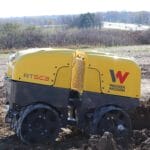
While many machines can compact granular materials reasonably well, clay requires equipment capable of generating kneading force throughout the lift. Conplant’s compaction matrix provides a broader comparison of roller types and where they are typically used across varying ground/site conditions.
Why Padfoot Rollers Work Best for Clay
For most clay applications, padfoot rollers are considered the most effective and best option because they are designed to work cohesive material deeper through the lift than smooth drum alternatives.
The pads concentrate force into smaller contact points, allowing the machine to penetrate and knead the material rather than simply compacting the surface.
This kneading action helps:
- Remove air voids
- Improve density through the lift
- Break down clods within the material
- Achieve more consistent compaction results
Padfoot rollers are commonly used across:
- Bulk earthworks
- Road construction
- Embankments and Dam construction
- Trenching operations
- Building platform preparation
Why Smooth Drum Rollers Are Less Effective in Clay
Smooth drum rollers generally perform better in granular soils where vibration can rearrange particles efficiently.
In clay, smooth drums can sometimes seal the surface too early, creating a dense upper layer while weaker material remains underneath, leading to shearing of the working surface.
This can produce misleading surface conditions that appear compacted but lack consistent density through the full depth of the lift, leading to movement in the subgrade.
Smooth drum rollers may still be used for finishing passes or sealing applications, but they are usually not the primary choice for cohesive soils/clay compaction.
When to Use Rammers and Plate Compactors
Smaller equipment still plays an important role in confined or restricted areas.
Rammers are commonly used for:
- Trench work
- Footings
- Utility installations
- Tight access areas
Their high-impact force works well in cohesive soils where larger rollers cannot operate effectively in tighter work environments.
Plate compactors are generally better suited to granular and mixed materials but may still be useful for smaller clay applications, depending on moisture conditions and lift thickness.
For larger projects, selecting the correct machine configuration early can significantly reduce rework, testing failures and programme delays.
Preparing the Site Before Compaction
Good compaction results often depend on preparation long before the first pass begins.
Before compacting clay soil, crews should:
- Remove all unsuitable material
- Strip vegetation and debris
- Pump out any excess water
- Establish proper soil and sub-base grading
- Identify soft or unstable zones
- Confirm moisture conditions
- Plan lift thicknesses and rolling patterns
Poor preparation can create inconsistencies that become difficult and costly to correct later in the project.
Lift Thickness Matters
One of the more common mistakes in clay compaction is placing lifts too thick.
When lifts exceed the effective compaction depth of the machine, the upper layer may compact while lower portions remain loose or unstable.
Controlled lift thicknesses help ensure compactive effort reaches through the entire working layers consistently.
The ideal lift depth varies depending on:
- Material type
- Moisture content
- Roller size and configuration
- Project specifications
Compacting Clay Soil: Key Steps
Successfully compacting clay usually comes down to controlling a few key variables consistently across the site.
- Prepare and grade the surface properly before compaction begins
- Check moisture conditions before placing or rolling any material
- Use controlled lift thicknesses to achieve full-depth compaction
- Select equipment suited to cohesive soils, typically padfoot rollers
- Maintain consistent rolling patterns and overlap between passes
- Monitor for pumping, water rising, rutting or movement during rolling
- Verify compaction results before progressing to the next layer
Rolling technique and machine selection can also influence final compaction quality. Conplant’s guide to choosing the right roller for soil compaction explores how different roller types behave across varying soil conditions and project applications.
Common Compaction Failures and How to Avoid Them
Clay compaction failures are often linked to a small number of recurring site issues.
Mistake | Why It Matters | Better Approach |
Compacting clay when too wet | Causes pumping and poor stability | Wait, aerate or stabilise |
Using the wrong compactor | Poor density and uneven results | Match equipment to soil and project size |
Compacting too deep at once / incorrect lift depth | Lower layers remain loose | Use controlled lift depths |
Skipping moisture testing | Inconsistent results | Test before and after compaction |
Another common issue is relying purely on surface appearance. Clay can sometimes form a dense crust at the surface while weaker material remains underneath. This is why proper testing, lift control and consistent compaction practices remain important across the entire footprint.
Testing and Verifying Compaction Results
Testing helps confirm whether compaction targets have been achieved before construction progresses.
Depending on project requirements, testing methods may include:
- Nuclear density testing
- Sand replacement testing
- Plate load testing
- Moisture content testing
- Proof rolling with static rollers
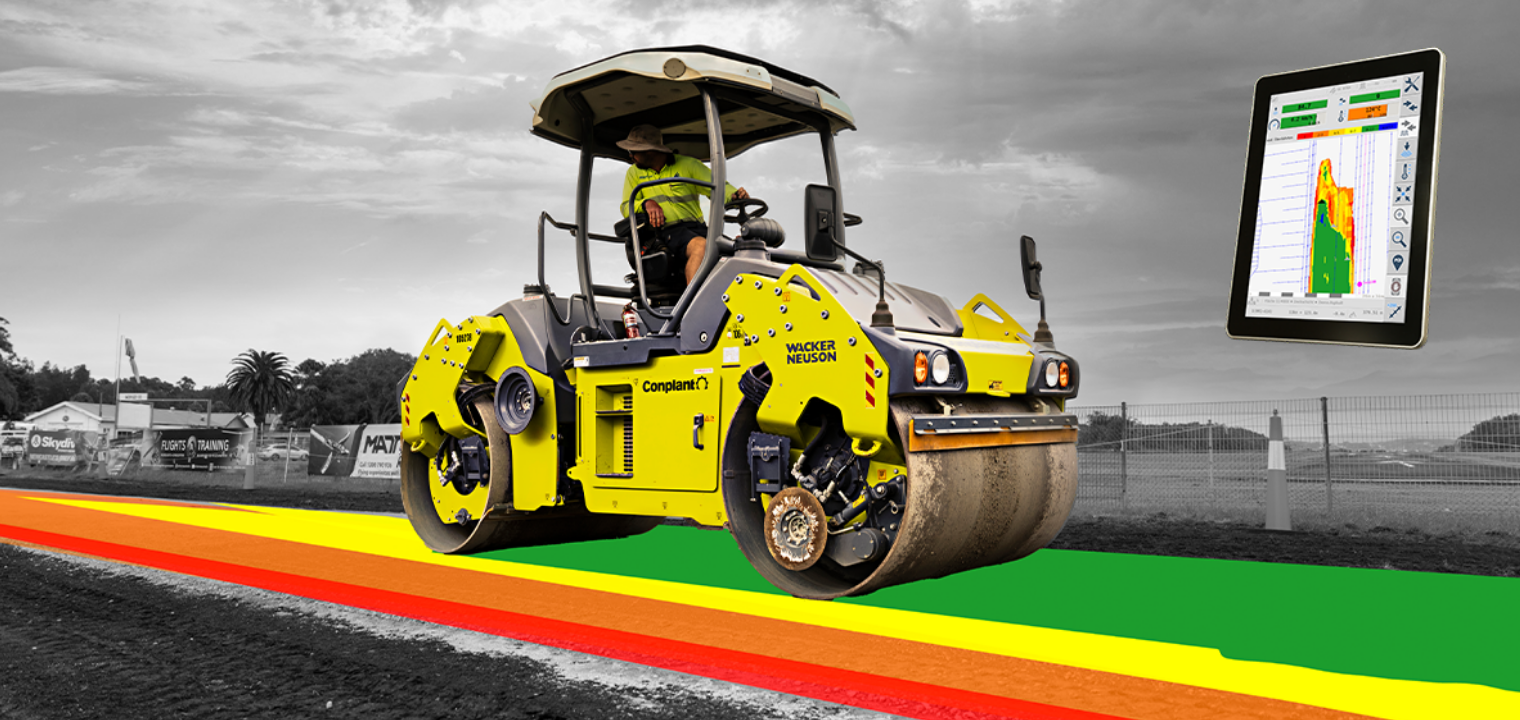
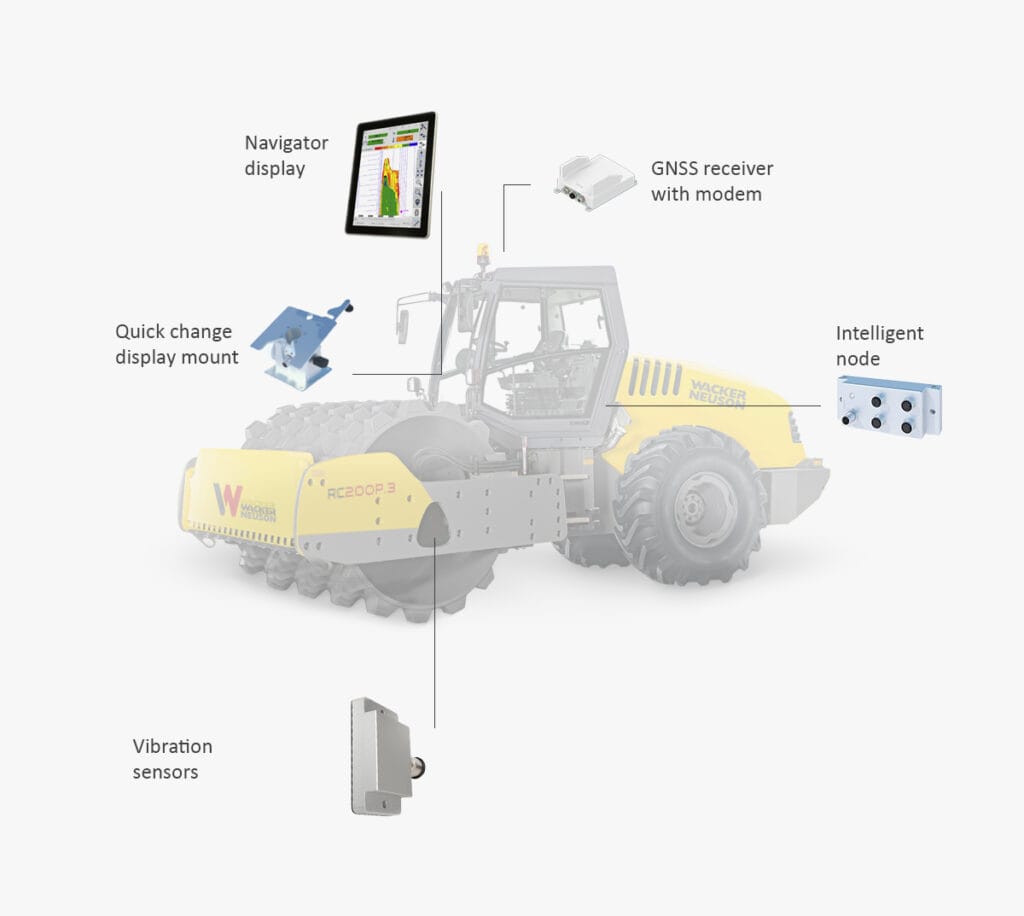
Across larger projects, some contractors also use intelligent compaction technologies to improve visibility during rolling operations. Conplant’s Völkel Intelligent Compaction technology is one example of how compaction monitoring continues to evolve across civil construction projects.
These systems provide operators with real-time coverage information, pass counts and machine behaviour across the site footprint, helping crews identify inconsistencies earlier during the compaction process rather than relying solely on isolated test locations.
Modern Compaction Approaches and Site Efficiency
As projects become larger and programmes tighten, consistency during compaction becomes increasingly important.
Across clay applications, small variations in moisture, lift thickness, or rolling patterns can quickly affect density outcomes across a site. This is one reason why many contractors are placing greater focus on visibility during compaction rather than relying solely on end-stage testing.
Modern compaction technologies and monitoring systems are helping crews improve:
- Live coverage visibility across the site footprint
- Consistency between operators and rolling patterns
- Documentation for quality assurance requirements
- Identification of soft spots or inconsistent areas earlier in the process
- Rolling efficiency, lower construction costs and reduced rework
On larger civil and infrastructure projects, this can help crews maintain productivity while improving confidence in overall compaction performance.
Conplant continues to support projects across Australia with compaction equipment suited to varying ground conditions, project scales and operational requirements.
When to Bring in Specialist Support
Some clay conditions require additional investigation or specialist input before compaction progresses.
This may include:
- Highly reactive clays
- Deep unstable zones
- Persistent moisture issues
- Repeated testing failures
- Large-scale infrastructure projects
Bringing in experienced compaction specialists early can help reduce delays, minimise rework and improve long-term ground performance outcomes.
Final thoughts
Clay soil can be difficult to work with, but the right approach and equipment will make a significant difference.
Successful compaction comes down to understanding how clay behaves, controlling moisture conditions and selecting equipment suited to cohesive soils rather than relying on surface appearance alone.
Across civil construction, roadworks and infrastructure projects, consistent compaction practices remain critical for achieving stable, long-term ground performance.
If you need guidance on compaction techniques or selecting the right machinery for clay conditions, the team at Conplant can help.
Frequently Asked Questions
Clay soil should be compacted at the correct moisture content using equipment suited to cohesive materials, typically padfoot rollers. Material should also be placed in controlled lifts to achieve consistent density through the full depth.
The best time is when moisture conditions are close to optimum levels. Extremely wet or dry conditions can reduce compaction effectiveness and lead to instability.
Compacting overly wet clay usually causes pumping, rutting and poor long-term stability. In many cases, the material should be allowed to dry or be treated before compaction continues.
Padfoot rollers are generally considered the best option for compacting cohesive clay soils because they create kneading action throughout the lift.
Clay reacts heavily to moisture changes and can become unstable when too wet or resistant to density when too dry. Its fine particles also require different compaction methods compared to granular soils.
Common failures include pumping, uneven density, crusting and weak lower layers. These issues are typically addressed through moisture control, proper lift thickness and correct equipment selection.