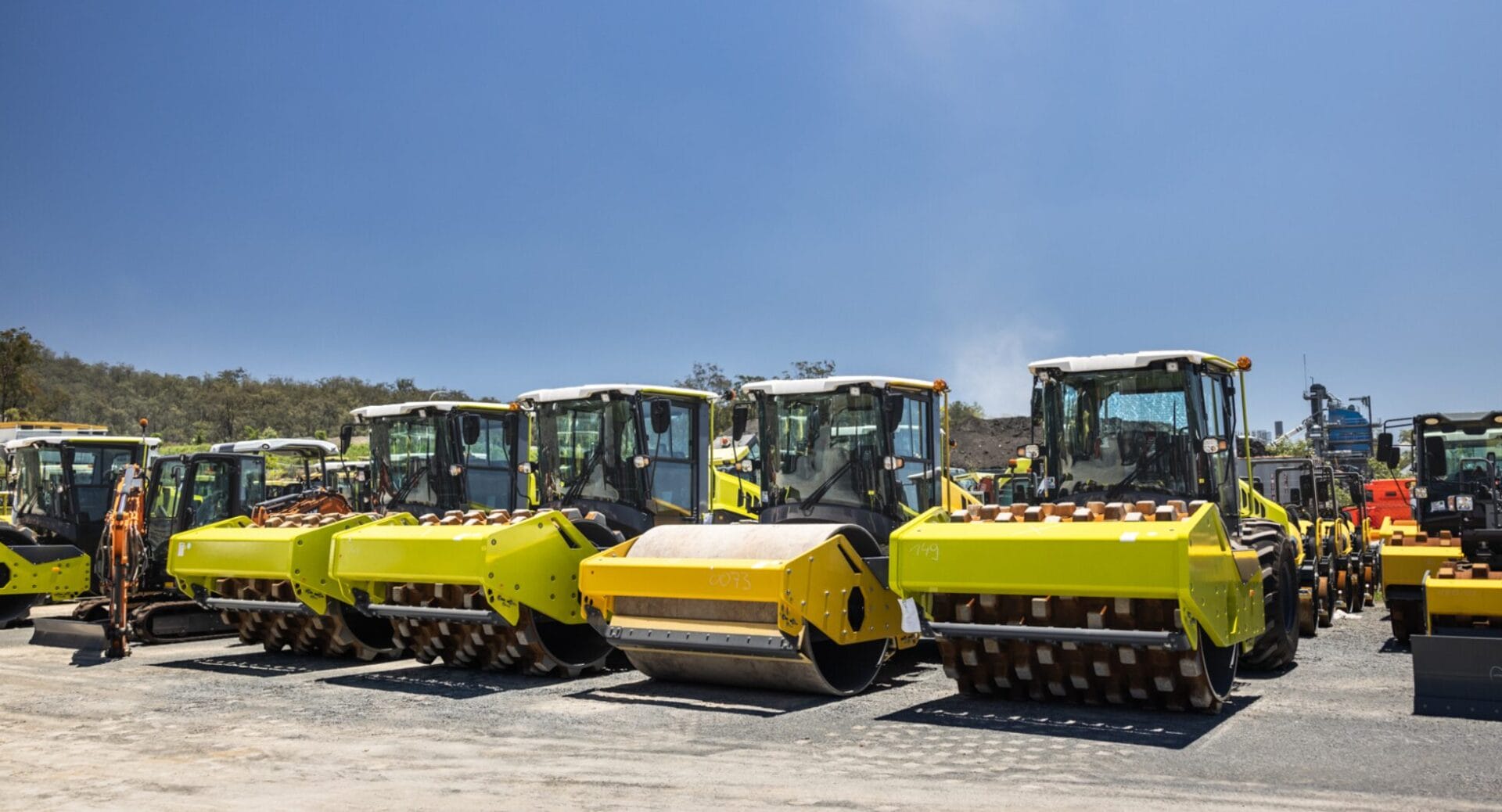
Völkel Intelligent Compaction and Western Sydney Airport
Within infrastructure delivery, there are moments where capability evolves in response to constraint, and others where it evolves in response to expectation. The airside civil works at Western Sydney Airport represent the latter, marking a point where the requirement was not simply to achieve compaction, but to understand and verify it in a fundamentally different way.
As part of the development of Western Sydney International Airport, the project forms part of one of Australia’s most significant current infrastructure programs. Unlike traditional road or bulk earthworks projects, airside construction introduces a heightened level of scrutiny over ground performance, consistency, and compliance, where variability cannot be managed by assumption or accepted as part of standard delivery.
Within this environment, the expectations placed on compaction extend beyond achieving density targets. They require a level of confidence in subsurface behaviour, uniformity and performance that cannot be fully captured through conventional testing methods alone. While density and moisture content remain important, they do not directly represent how the ground will respond under working load, particularly across large, variable sites.
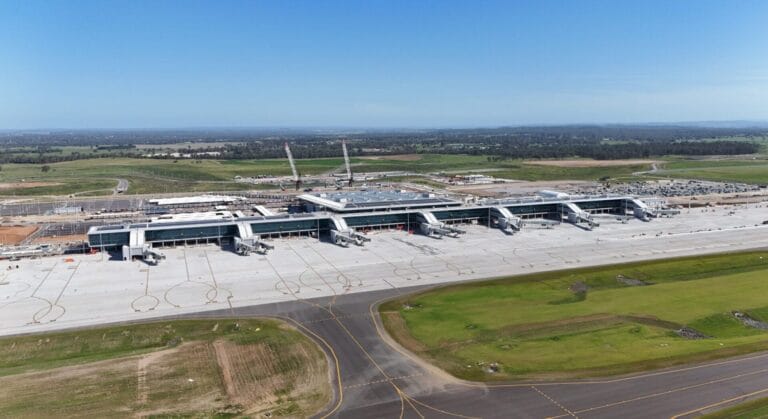
Project Snapshot: Western Sydney Airport Airside Civil Works | |
Area | Detail |
The Challenge | Airside construction required a higher level of confidence in ground consistency, performance and compliance than conventional compaction verification methods could provide alone. |
Traditional Limitation | Spot testing methods captured only isolated locations across a large treatment area, limiting visibility between test points. |
The Solution | Deployment of Völkel Intelligent Compaction across smooth drum and tandem rollers to provide continuous real-time feedback during compaction operations. |
System Capability | GNSS positioning and onboard accelerometers continuously measured pass counts, ground stiffness and machine location across the site. |
Operational Integration | Intelligent Compaction was embedded into live project delivery, supporting operators and supervisors during active construction rather than acting as a post-process review tool. |
The Outcome | Improved visibility of site variability, greater confidence in compaction consistency and support for a method specification approach to compaction quality. |
Legacy | Established Intelligent Compaction as a practical capability within major infrastructure delivery and influenced broader adoption across Conplant’s fleet strategy. |
It is within this context that the introduction of Völkel Intelligent Compaction becomes significant.
Völkel Intelligent Compaction represents a shift from outcome-based verification to process-based understanding. The system measures, documents and visualises the compaction process in real time, using GNSS positioning and onboard accelerometers to provide continuous feedback on pass counts, ground stiffness and machine location. Rather than relying on spot tests that capture only a fraction of the treated area, it provides a continuous, site-wide view of compaction performance, enabling both operators and supervisors to see how the ground is responding as work progresses.
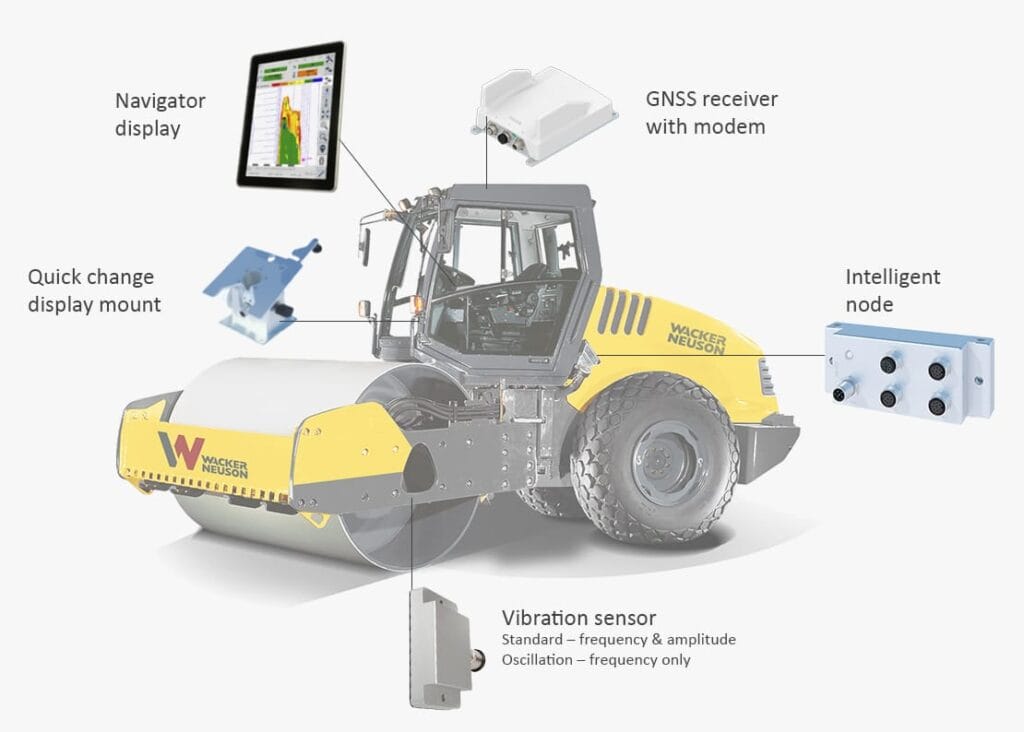
Rather than treating compaction as a process to be completed and later verified, Intelligent Compaction allows ground response to be observed in real time as work progresses. Stiffness, pass counts and material behaviour are no longer inferred after the fact, but measured continuously across the site, providing a level of visibility that changes how decisions are made on the ground.
At Western Sydney Airport, this was not implemented as a supplementary layer of data collection, but as an integrated part of the project delivery. A broad range of rollers were deployed across the project, including smooth drum and tandem units equipped with Völkel Intelligent Compaction systems, alongside padfoot and multi-tyre rollers operating within the broader compaction scope. This enabled consistent feedback across applicable stages of work while maintaining alignment with different compaction methods and material conditions.
The significance of this lies not only in the technology itself but in how it was applied. The system was introduced within a live, large-scale construction environment where program, compliance and performance expectations were tightly aligned. The ability to visualise compaction in real time allowed operators and site teams to respond to variability as it occurred, rather than relying solely on post-process testing to identify issues.
This represents a shift in how compaction is understood.
Where traditional approaches often rely on outcome-based verification, Intelligent Compaction supports a method specification approach by allowing the compaction process itself to be observed as it occurs. Variability across a site becomes visible, patterns begin to emerge, and decisions can be made with greater confidence in how the ground is behaving beneath the surface.
For Conplant, the introduction of Völkel Intelligent Compaction at Western Sydney Airport marked the first major deployment of this capability within a high-pressure project environment. It established not only the technical viability of the system, but its practical value when integrated into complex infrastructure delivery.
More importantly, it reshaped how compaction is supported as a service.
The role of equipment extended beyond providing force and coverage to enabling insight. Data became part of the offering, not as an add-on, but as a core component of how compaction performance is understood, communicated and verified.
That shift continues to influence how Conplant operates today. Intelligent Compaction is now available across a growing portion of the fleet, with units configured or readily retrofitted to suit project requirements, rather than applied as a default across all machines. This allows contractors to access the capability where verification, compliance and consistency are critical, while maintaining flexibility in how equipment is specified and deployed. It reflects a broader move towards aligning equipment capability with the increasing demand for transparency and accountability in infrastructure delivery.
Positioned within this series, Western Sydney Airport represents a different kind of inflection point to the Pacific Highway project that precedes it. Where the earlier project responded to constraint through invention, this project responds to expectation through visibility. Together, they illustrate how capability is shaped not only by what is possible, but by what is required.
More From The Series
Continue exploring the projects that have shaped Conplant's equipment, technology and technical expertise.
The Projects That Built Conplant
An Introduction to the Series
Discover how decades of investment, innovation and major infrastructure projects have shaped the equipment, expertise and service Conplant delivers today.
When Constraint Defined Capability
Pacific Highway: Warrell Creek to Nambucca Heads
Remote operation wasn’t simply an innovation. It became a project requirement that changed how rollers were supplied and operated in high-risk environments.
When the Method was Specified, not Assumed
Coomera Connector Stage 1
One project specification challenged conventional fleet capability and influenced how specialised compaction equipment was sourced and supported.
When Support Became Part of the Solution
South Flank Mine
In remote mining operations, equipment availability can become just as important as compaction performance. Supporting production required a different operating model.