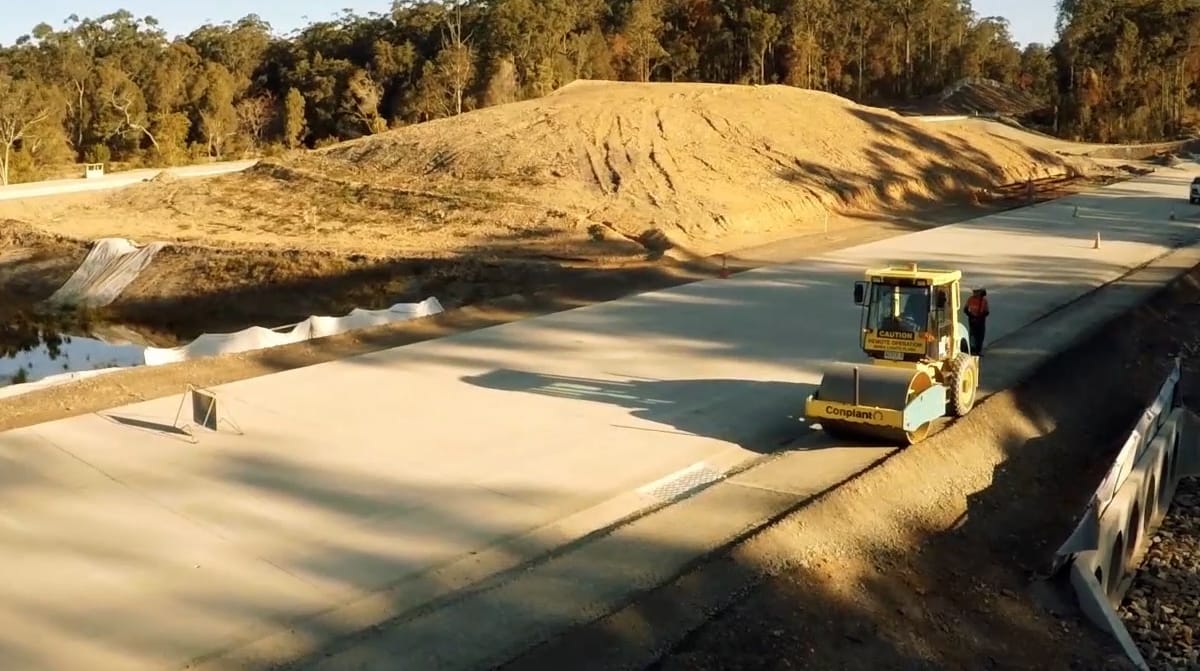
Remote unmanned compaction and the Pacific Highway - Warrell Creek to Nambucca Heads Upgrade
Within large-scale infrastructure delivery, there are projects that expand capability gradually, and then there are those that force a fundamental shift in how work is approached. The Pacific Highway upgrade between Warrell Creek and Nambucca Heads sits firmly in the latter category, representing a point where established methods were no longer sufficient to meet the realities of the job.
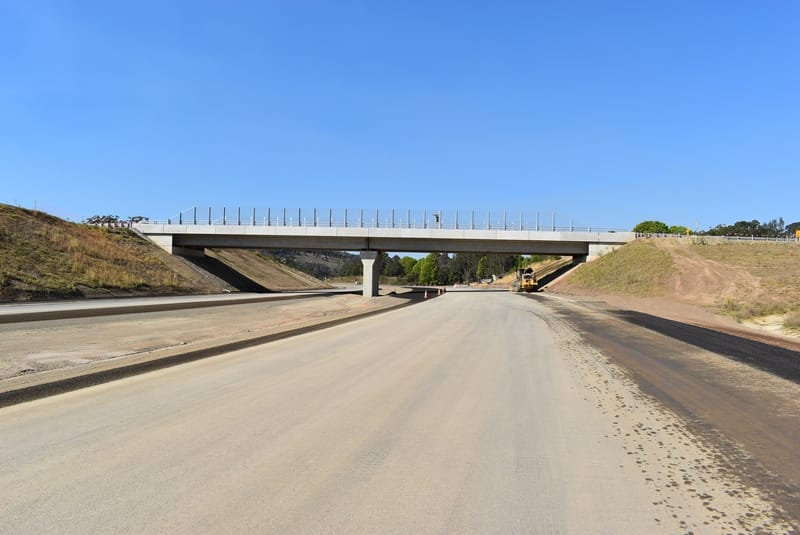
The project formed part of the broader Pacific Highway upgrade program, one of Australia’s most significant and sustained transport infrastructure investments. While the scale of the program is well understood, it is the operational conditions within individual project sections that tend to shape how work is ultimately executed. On this section of the Pacific Highway upgrade, those conditions introduced a level of complexity that could not be addressed through conventional compaction delivery alone.
As with many major infrastructure projects, the challenge was not defined by a single constraint, but by the interaction of several. Access across sections of the site was limited and evolving as construction progressed, safety requirements placed increasing emphasis on reducing operator exposure, and program pressures required consistent, reliable output across changing ground conditions. Within this environment, the use of standard manned compaction equipment was not always the most appropriate or effective solution.
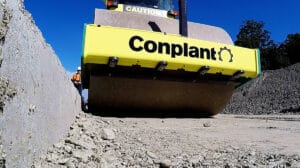
Project Snapshot: Warrell Creek to Nambucca Heads | |
The Challenge | The upgrade involved navigating complex terrain where traditional manned compaction posed significant risks. Key constraints included: |
Geotechnical Instability | Soft soils and steep embankments required precise compaction without risking operator safety. |
Restricted Access | Tight corridors and evolving site boundaries limited the movement of standard heavy plant. |
Aggressive Timelines | High-volume output was required to stay ahead of the broader Pacific Highway completion schedule. |
The Solution: Unmanned Remote Compaction | |
Fleet Deployment | Integration of purpose-built remote-controlled rollers into the live construction environment. |
Peak Activity | Up to 4 unmanned units were deployed across the project, with dual-machine simultaneous operation in active zones. |
Operational Integration | Unlike standalone trials, these units operated under standard Tier 1 safety, performance, and scheduling KPIs. |
The Outcome | |
Risk Elimination | Effectively removed operators from high-exposure environments (steep batters and confined spaces). |
Proven Reliability | Demonstrated that remote technology could meet the “grunt” requirements of an $830M infrastructure project. |
Legacy | Established the blueprint for Conplant’s Smart Compaction and remote-solution capabilities. |
Rather than treating these factors as isolated issues to be managed within existing fleet capability, the project created a situation where a different approach was required from the outset. The response was not simply to adjust equipment selection or deployment strategy, but to reconsider how compaction could be carried out under these conditions.
This led to the development of remote unmanned compaction units, designed and built specifically to meet the requirements of the project. Importantly, these units were not introduced as a trial or limited application. From 2017 onwards, they were integrated into live project delivery, with multiple machines operating concurrently across the site during peak periods of activity. At certain stages of the project, four unmanned units were deployed, with two operating simultaneously within active work zones.
The significance of this lies not only in the introduction of the technology itself, but in the context in which it was applied. The units were deployed within an active construction program, under the same performance, safety and scheduling expectations as any other piece of plant on the project. Their continued use over an extended period demonstrates that the approach was not only viable but effective within the broader delivery framework.
In this sense, the project represents more than a single instance of innovation. It illustrates how project conditions can directly influence the evolution of capability when existing methods no longer align with operational requirements. The need to manage risk, maintain productivity and adapt to constrained environments did not result in incremental change, but in a shift towards a different operating model for compaction in specific contexts.
For Conplant, this project is significant not because it introduced a new piece of equipment in isolation, but because it marked a point at which the business moved beyond supplying fleet to actively developing solutions in response to project-specific demands. The development and successful deployment of remote unmanned compaction units established a capability that extended beyond the project itself, shaping how Conplant approaches high-risk and constrained environments more broadly. It reinforced a model where equipment is not only supplied, but configured and, where required, purpose-built to meet the realities of a given site.
That shift continues to underpin how Conplant operates today. The ability to respond to complex access conditions, manage operator exposure and align equipment capability with project-specific risk profiles is now embedded within the business, rather than treated as an exception. In this way, the project did not simply introduce a new method of compaction delivery; it helped define an approach that continues to inform how the fleet is developed, deployed and supported across major infrastructure projects.
It reflects a broader pattern that continues to shape how capability is built: not through predefined systems, but through the accumulation of responses to real-world constraints encountered on site.
Positioned at the beginning of this series, the Pacific Highway – Warrell Creek to Nambucca Heads Upgrade establishes a clear foundation for what follows. It demonstrates that some of the most important developments do not emerge from planned evolution, but from situations where there is no direct precedent, and where the only viable path forward is to build a solution that does not yet exist.
More From The Series
Continue exploring the projects that have shaped Conplant’s equipment, technology and technical expertise.
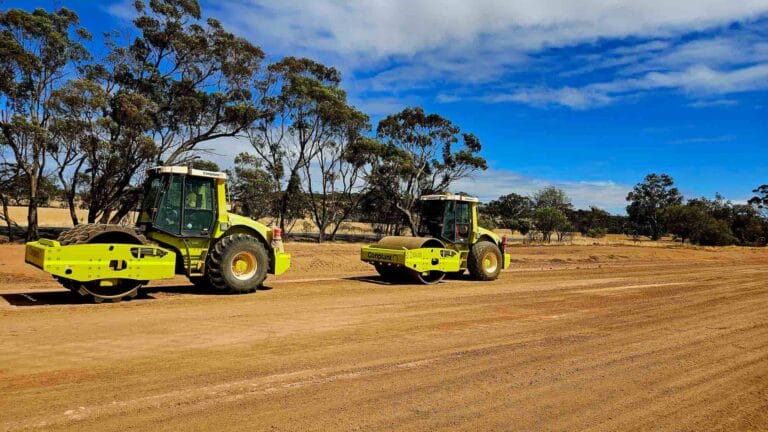
The Projects That Built Conplant
An Introduction to the Series
Discover how decades of investment, innovation and major infrastructure projects have shaped the equipment, expertise and service Conplant delivers today.
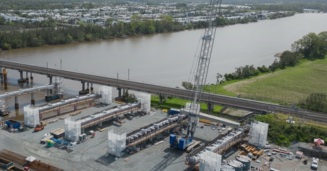
When the Method was Specified, not Assumed
Coomera Connector Stage 1
One project specification challenged conventional fleet capability and influenced how specialised compaction equipment was sourced and supported.
When Compaction Became Measurable
Western Sydney Airport Intelligent Compaction
As quality assurance expectations evolved, Intelligent Compaction became more than data collection. It became part of project delivery.
When Support Became Part of the Solution
South Flank Mine
In remote mining operations, equipment availability can become just as important as compaction performance. Supporting production required a different operating model.