When Support Became Part of the Solution

By Kelly Scott
07/08/2026

Compaction Reliability on South Flank

In large-scale mining operations, the demands placed on equipment differ fundamentally from those encountered on civil infrastructure projects. While transport corridors and urban works often operate within staged programs and constrained environments, mining projects introduce continuous production pressures, remote conditions and a level of operational intensity where downtime has immediate and measurable consequences. The South Flank project provides a clear example of how these conditions shape both equipment selection and performance expectations. 

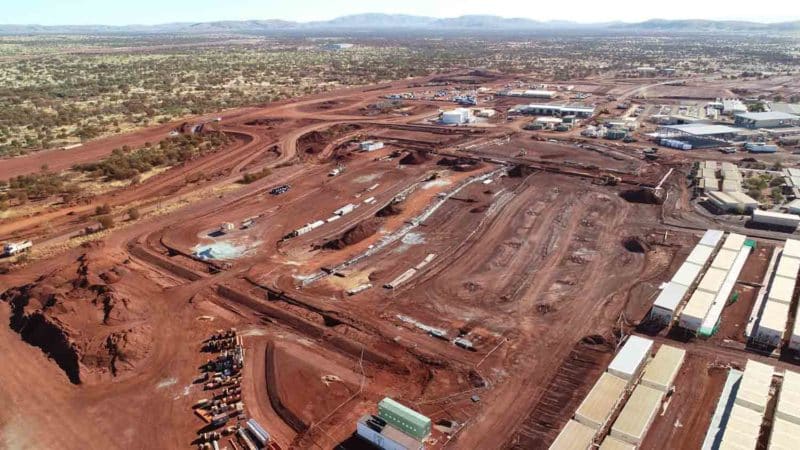
Aerial view of a large mining site with red soil, equipment, and buildings.

South Flank represents one of the largest iron ore developments in Western Australia in recent years, both in scale and long-term production significance. Projects of this magnitude extend beyond typical construction timelines, requiring infrastructure that can support continuous operations over decades. Bulk earthworks and concrete works formed a critical part of the project scope, supporting the development of infrastructure required for sustained mining operations at scale. Within this environment, compaction was not an isolated task, but a continuous process underpinning haul roads, working platforms and structural foundations.

Unlike staged infrastructure projects, where equipment can be rotated, substituted or adjusted as programs evolve, mining environments require a different level of consistency. Machines are expected to operate for extended periods under demanding conditions, often in remote locations where access to support, replacement equipment or workshop facilities is limited. In this context, reliability is not simply a preference, but a requirement.

Project Snapshot: South Flank

Area

Detail

The Challenge

Continuous mining operations demanded equipment capable of delivering consistent performance with minimal downtime.

Operating Environment

Remote, production-driven conditions left little tolerance for equipment failure or delays.

Fleet Deployment

Heavy smooth drum and padfoot rollers, supported by tandem and single drum units, matched to varying construction activities.

Support Model

Preventative maintenance, proactive servicing and responsive technical support helped maximise equipment availability.

The Outcome

Reliable fleet performance supported continuous production across a demanding mining environment.

Legacy

Reinforced Conplant’s focus on uptime, reliability and mine-spec fleet support for large-scale mining projects.

The compaction fleet deployed on South Flank reflected this need for durability and sustained performance. Heavy smooth drum and padfoot rollers in the 18–22 tonne range formed the backbone of the operation, supported by tandem and single drum units to address varying material conditions and construction stages. The selection of these machines was driven not only by compaction requirements but by their ability to withstand continuous use in a production-driven environment.

What distinguishes this project within the context of Conplant’s evolution is the shift in how performance is defined. On projects such as South Flank, success is not measured solely by achieving compaction targets but by maintaining those outcomes consistently over time, without interruption. Equipment must perform reliably day after day, often under harsh conditions, with minimal tolerance for failure.

This introduces a different kind of capability requirement.

Rather than focusing on innovation, data or method selection, the emphasis shifts to durability, maintenance planning and operational support. Ensuring that machines remain available and perform as expected becomes central to project delivery, particularly where delays can impact broader production schedules.

For Conplant, this project reinforces the importance of uptime as a core component of capability. Supporting mining operations requires not only robust equipment, but a service model that prioritises reliability, proactive maintenance and rapid response when issues arise. It reflects an understanding that, in these environments, the value of equipment is defined as much by its availability as by its performance.

This approach continues to influence how mining projects are supported today. Fleet selection, maintenance strategies and support structures are aligned with the demands of continuous operation, ensuring that equipment can meet the expectations of production-driven environments.

Positioned within this series, South Flank represents the final stage in the evolution of capability. Where earlier projects introduced new ways of working, measuring or selecting compaction, this project highlights the importance of sustaining performance over time. It demonstrates that, in certain environments, the most critical outcome is not innovation or flexibility, but the ability to deliver consistent, reliable performance without interruption.

More From The Series

Continue exploring the projects that have shaped Conplant's equipment, technology and technical expertise.

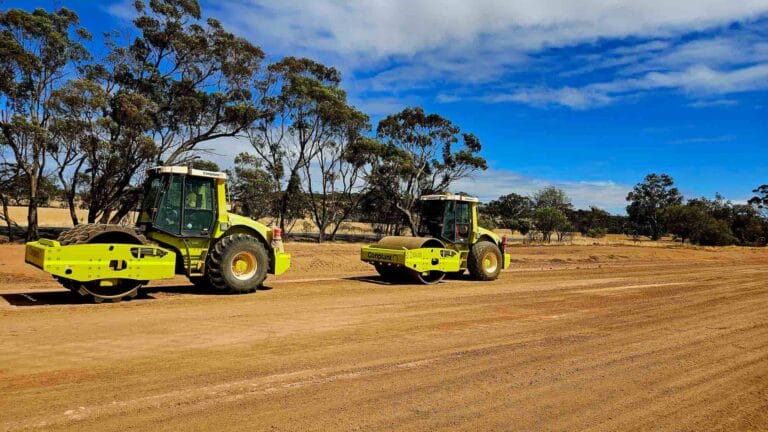
Two yellow construction rollers are diligently working on a dirt road under a blue sky with scattered clouds. Their effort in compaction promises smooth finishes. Trees line the background, partially shading the cleared landscape.

The Projects That Built Conplant

An Introduction to the Series

Discover how decades of investment, innovation and major infrastructure projects have shaped the equipment, expertise and service Conplant delivers today.

Read the Introduction →

construction site - New South Wales Pacific Hwy

When Constraint Defined Capability

Pacific Highway: Warrell Creek to Nambucca Heads

Remote operation wasn’t simply an innovation. It became a project requirement that changed how rollers were supplied and operated in high-risk environments.

Explore the project →

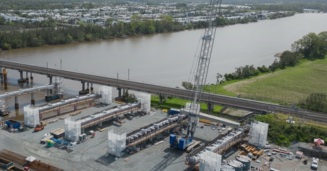
Construction site along a river with an elevated bridge overhead, a tall crane, and rows of concrete foundations and equipment.

When the Method was Specified, not Assumed

Coomera Connector Stage 1

One project specification challenged conventional fleet capability and influenced how specialised compaction equipment was sourced and supported.

Explore the project →

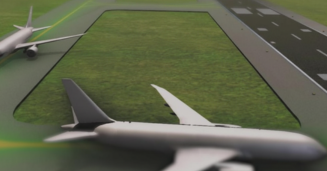
Two airplanes on a taxiway beside a grassy strip at an airport.

When Compaction Became Measurable

Western Sydney Airport Intelligent Compaction

As quality assurance expectations evolved, Intelligent Compaction became more than data collection. It became part of project delivery.

Explore the project →

More news from Conplant

A row of bright yellow heavy equipment, including steamrollers and construction vehicles, is parked on a dirt lot under a clear blue sky. Trees are visible in the background, and the area provides safe storage at what appears to be a construction site or machinery storage area.

When Support Became Part of the Solution

South Flank demonstrated that successful mining compaction depends on more than machine performance. Reliable equipment, proactive maintenance and responsive fleet support are essential to keeping production moving in demanding mining environments.

Read more
A row of bright yellow heavy equipment, including steamrollers and construction vehicles, is parked on a dirt lot under a clear blue sky. Trees are visible in the background, and the area provides safe storage at what appears to be a construction site or machinery storage area.

When Support Became Part of the Solution

South Flank demonstrated that successful mining compaction depends on more than machine performance. Reliable equipment, proactive maintenance and responsive fleet support are essential to keeping production moving in demanding mining environments.

Read more

Sign up to get the latest from Conplant

Enter your details below to receive regular news and updates from Conplant.

What are you interested in?*