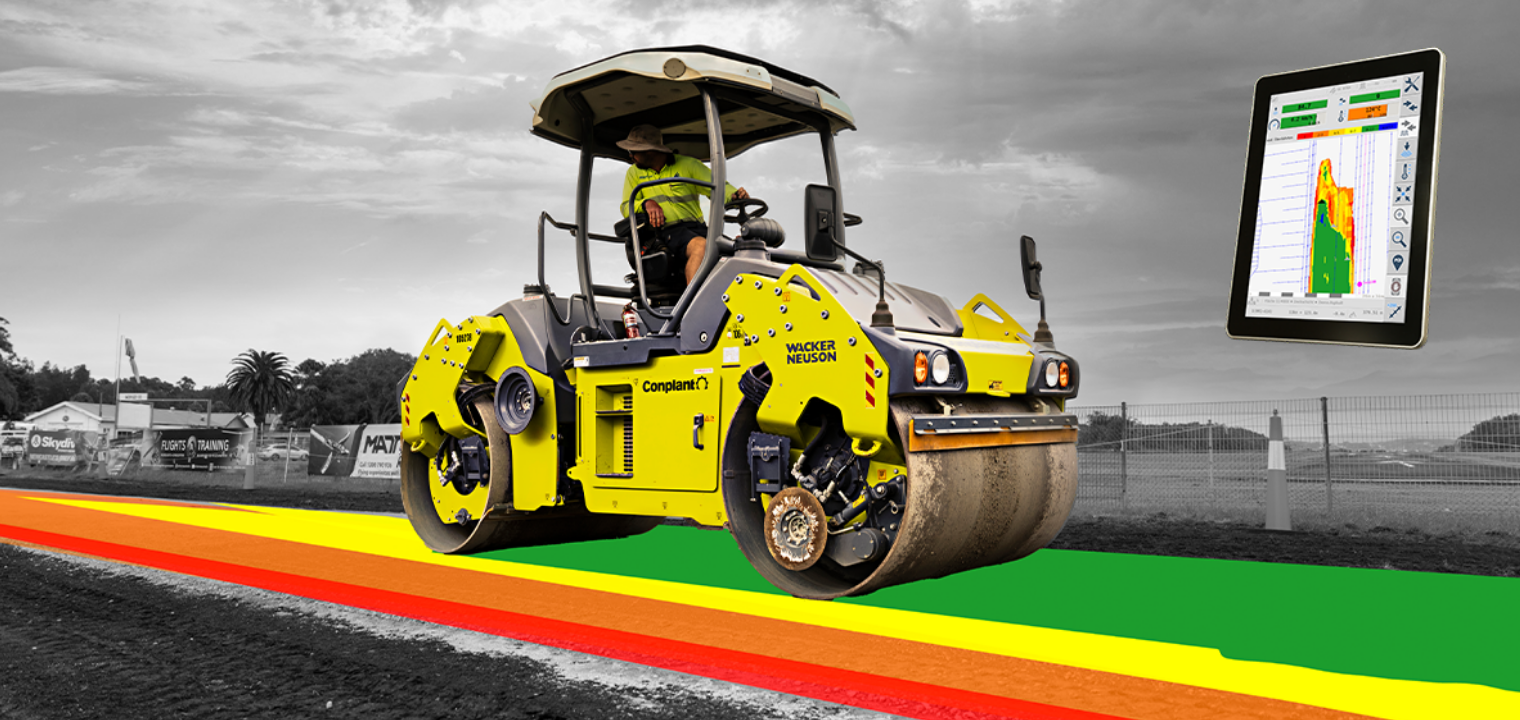
On the surface, compaction equipment can look fairly similar. A roller is a roller, right?
But the difference between preparing a backyard extension or landscaping job and compacting layers across a new subdivision is massive. Different soil conditions, lift depths, moisture contents, access constraints, and production targets all affect which equipment makes sense on site.
A small plate compactor might be perfect for paving preparation or a residential retaining wall, but it will quickly struggle on a large commercial hardstand or road project. The opposite can also be true, with large rollers often impractical in confined residential spaces.
Understanding the difference between residential and commercial compaction equipment is not just about machine size. It affects site efficiency, compaction performance, project timelines, operating costs and long-term ground stability.
Table of Contents
Why Compaction Requirements Change Between Residential and Commercial Projects
Residential Compaction Equipment
Commercial Compaction Equipment: Productivity, Depth and Coverage
Intelligent Compaction and Modern Fleet Technology
Residential vs Commercial Compaction Equipment: Key Differences
Can Residential Equipment Be Used on Commercial Projects?
Hire vs Purchase: Which Makes More Sense?
Common Mistakes When Choosing Compaction Equipment
Why Compaction Requirements Change Between Residential and Commercial Projects
Compaction requirements change quickly once projects increase in size, traffic demand and material depth.
Residential works such as driveways, landscaping and pathways are typically completed in smaller areas with thinner pavement layers and tighter access. Commercial projects such as subdivisions, roadworks and industrial hardstands often involve deeper lifts, larger footprints and stricter compaction and load-bearing requirements.
That changes the type of equipment needed on site.
Smaller residential equipment is usually focused on accessibility and manoeuvrability, while commercial compaction equipment is designed around efficient production, coverage and the ability to influence deeper layers.
Ground conditions also become more critical as the project scale increases. Cohesive materials such as clay often respond differently to compaction than granular materials or asphalt, which is why different machine types are used across different site sizes and applications.
For example, padfoot rollers are commonly used on clay and cohesive fill, while smooth drum rollers are better suited to granular materials and asphalt works. Resources such as the Conplant Compaction Matrix can help contractors better understand which machine types suit different materials and applications.
Residential Compaction Equipment
Residential projects usually involve tighter access, smaller work areas and thinner lift pavement layers, which changes the type of equipment that makes sense on site.
Rather than large production rollers, residential compaction equipment is generally focused on manoeuvrability and the ability to work effectively in confined and tight spaces.
That is why smaller machines are commonly used across applications such as:
- Driveway base preparation
- Backyard landscaping
- Paving and pathway preparation
- Trench backfill and utility installation
- Small retaining wall foundations
- Shed slabs and residential extensions
The equipment used across these types of projects is generally designed around portability, accessibility and ease of operation, particularly where work is being completed in smaller or confined areas.
Plate Compactors
Plate compactors are among the most common machines used on residential projects. Their compact footprint makes them ideal for paving preparation, pathways and confined areas where larger rollers cannot operate effectively in tighter or confined site conditions.
Forward and reversible plate compactors are commonly used depending on the size of the job and the level of compaction force required.
Rammers
Rammers are particularly effective in cohesive soils such as clay and are often used in trenches, utility work or narrow excavation work.
Their high-impact force allows operators to compact material in confined areas where standard rollers or plates would struggle and be unable to complete the job effectively.
Small Rollers and Walk-Behind Rollers
Mini Tandem or rollers and Pedestrian walk-behind rollers bridge the gap between hand-operated equipment and larger ride-on rollers.
They are commonly used for:
- Residential driveways
- Small asphalt repairs and carpark work
- Landscaping and paving works
- Footpaths and shared pathways
The advantage of smaller residential compaction equipment is flexibility. The trade-off is production speed and compaction depth. While ideal for smaller projects, these machines are not designed for high-volume commercial production work.
Commercial Compaction Equipment: Productivity, Depth and Coverage
Commercial and civil projects place very different demands on compaction equipment.
Larger work areas, deeper lift fill layers and higher production targets require machines capable of maintaining consistent compaction across broader footprints while keeping pace with earthworks programs and production timelines.
That is why heavier compaction equipment is commonly used across applications such as:
- Road construction and maintenance
- Large carparks
- Industrial hardstands
- Subdivision works
- Bulk earthworks
- Civil infrastructure projects
These types of projects typically require larger machines capable of maintaining higher production levels across broader work areas while also achieving compaction through deeper material layers.
Smooth Drum Rollers
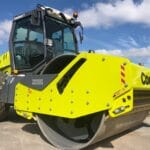
Smooth drum rollers are widely used across road construction, asphalt works and granular and mixed material compaction, particularly where consistent surface finish and coverage rates are important.
They are commonly used on projects such as road and sub-base preparation, asphalt compaction, carparks and subdivision works where operators need to maintain productivity across larger open areas.
Compared to smaller residential equipment, smooth drum rollers are designed to compact broader sections of material more efficiently while maintaining consistent performance across the site.
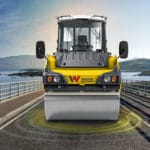
Modern rollers may also include technologies such as oscillation compaction, which can help reduce vibration transfer in sensitive or residential environments while still achieving effective compaction performance.
Padfoot Rollers
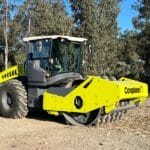
Padfoot rollers are typically used on cohesive materials such as clay and mixed fill, where a select moisture content is required, and a kneading compaction action is needed to work through deeper layers of material.
Unlike smooth drum rollers, which are generally better suited to granular, mixed materials and asphalt, padfoot rollers are designed to penetrate and manipulate cohesive soils more effectively.
They are commonly used across:
- Bulk earthworks
- Embankments and Dam construction
- Larger Subdivisions
- Infrastructure projects
- Site preparation works involving clay-based material
Their ability to compact through deeper lifts makes them particularly valuable on larger civil projects where ground conditions and long-term stability become more critical.
Compared to smaller residential compaction equipment, padfoot rollers are designed around production, depth and the ability to maintain consistent compaction performance across broader work areas.
Intelligent Compaction and Modern Fleet Technology
Larger commercial projects are increasingly integrating technologies that provide greater visibility over the compaction process itself.
Systems such as Völkel Intelligent Compaction allow operators and site teams to monitor pass counts, compaction coverage and machine response in real time.
Rather than relying entirely on isolated spot tests, this provides a broader view of how compaction is progressing across the project footprint.
Industry organisations such as Austroads and the Australian Asphalt Pavement Association also provide valuable guidance around pavement construction and compaction practices across Australian infrastructure projects.
Residential vs Commercial Compaction Equipment: Key Differences
Factor | Residential Projects | Commercial Projects |
Typical applications | Driveways, landscaping, pathways, and small slabs | Roads, carparks, subdivisions, bulk earthworks |
Common equipment | Plate compactors, rammers, mini pedestrian rollers | Smooth drum rollers, padfoot rollers, heavy compactors |
Typical layer depth | Often 100–200mm lifts | Commonly 200–500mm+ lifts depending on specification |
Material types | Decorative gravels, crusher dust, paving base, light fill | Road base, structural fill, clay, bulk earthworks material |
Compaction requirements | Lighter traffic loads, thinner lift pavement layers and smaller work areas | Higher load-bearing requirements, deeper lifts and large-scale coverage demands |
Operator requirements | DIY users or small crews | Trained operators and site supervision |
Fleet size | Single machine or small setup | Multiple rollers and support equipment |
Budget considerations | Lower upfront machine and Hire cost and shorter hire periods | Higher operating costs and long-term production planning |
Can Residential Equipment Be Used on Commercial Projects?
Sometimes, yes.
Residential compaction equipment can still play an important role in commercial projects, particularly in confined or specialised work areas.
For example:
- Plate compactors may be used around pits and service trenches and narrow carparks
- Rammers are often used in narrow excavations and utility work
- Small / Pedestrian rollers may assist with footpaths or edge work
However, using residential equipment for large-scale commercial compaction quickly creates limitations on production.
The biggest issue is usually productivity. Smaller machines simply cannot maintain the coverage rates required on large civil projects. Compaction depth can also become a concern, particularly where thicker fill lift layers or higher load-bearing performance is required.
Trying to save money by under-sizing equipment often creates delays and extends project timelines, inconsistent compaction and unnecessary rework later in the project.
Hire vs Purchase: Which Makes More Sense?
The decision to hire or purchase compaction equipment depends heavily on utilisation, project frequency and the type of work being completed.
For contractors completing occasional residential projects, hiring equipment often provides greater flexibility without the long-term maintenance and ownership costs.
Commercial contractors may benefit from ownership where equipment utilisation remains consistently high across multiple projects.
Many businesses still hire specialised compaction equipment even when they own part of their fleet, particularly when projects require different machine types and sizes, drum configurations or newer technology.
For many contractors, the decision also comes down to how often the equipment will be used. Residential projects may only require a compactor occasionally, while commercial contractors often need access to multiple machines across different stages of a project. Conplant’s hire vs buy guide explores some of the longer-term considerations around ownership, utilisation, fleet flexibility and project demand in more detail.
Common Mistakes When Choosing Compaction Equipment
One of the most common mistakes on site is choosing equipment based purely on machine size rather than project requirements.
A larger machine is not always the better option, and smaller equipment is not always the cheaper solution once productivity timelines and labour are factored in.
Some of the most common issues include:
Ignoring Soil Type
Different material types respond differently to compaction methods.
Granular material, mixed fill and cohesive clay all require different approaches. Using unsuitable equipment can reduce efficiency and impact final compaction performance.
Underestimating Production Requirements
A machine that works well on a small residential project may become completely impractical on a subdivision or road project simply due to coverage rates.
Not Considering Site Access
Large rollers may deliver excellent productivity, but they still need room to operate safely and effectively.
Access restrictions, sensitive areas, trench work and confined areas often require smaller support equipment.
Focusing Only on Upfront Cost
Cheaper equipment does not always mean lower project cost.
Delays, additional passes, fuel usage and rework can quickly outweigh any initial savings if the wrong machine is selected.
Choosing the Right Equipment Starts with the Site
The right compaction equipment is rarely just about machine size. Ground conditions, access, material type and project scale all influence what will perform best on site.
Whether it’s a backyard landscaping job or large-scale civil infrastructure, having the right equipment from the start helps avoid delays, rework and unnecessary cost.
Conplant works with contractors across projects of all sizes to help match equipment to real site conditions and production requirements. Whether you need a small plate compactor for residential works or a large roller fleet for commercial construction, choosing the right solution early can make a significant difference to productivity and long-term performance.
Frequently Asked Questions
Residential compaction equipment is generally smaller and designed for confined spaces and lighter applications such as driveways, landscaping and pathways. Commercial compaction equipment is larger and designed for deeper compaction, higher productivity and large-scale civil construction projects.
Plate compactors, rammers and small/pedestrian rollers are commonly used for residential projects, depending on the material type and access conditions.
Commercial projects commonly use smooth drum rollers, padfoot rollers and heavy compaction equipment designed for large coverage areas and deeper compaction requirements.
In some cases, yes. Smaller compaction equipment is often used on commercial projects for trenches, edge work and confined or underground carpark spaces. However, it is generally not suitable for large-scale production compaction.
This depends on project frequency, utilisation rates and long-term fleet requirements. Hiring often provides flexibility and access to specialised equipment without any significant ownership costs.
Common mistakes include ignoring soil type, underestimating production requirements, overlooking access limitations and selecting equipment based solely on upfront cost.