Australia’s road network is under increasing pressure, and the challenge is no longer just about maintenance. It is about resilience.
With approximately 900,000 kilometres of roads across the country, more than 80 percent of which are rural and remote, local governments carry the bulk of the responsibility for keeping communities connected. As outlined in the National Road Safety Strategy infrastructure planning and investment fact sheet, this network is vast, dispersed, and often exposed to some of the harshest environmental conditions in the world.
What has changed in recent years is the frequency and intensity of those conditions. Flooding events are becoming more severe. Heatwaves are lasting longer. Storm systems are delivering greater rainfall in shorter periods. The result is a network that is increasingly vulnerable to disruption, damage, and in some cases, complete isolation.
We have already seen this play out across the country. Sections of Western Australia’s transport network, including the Eyre Highway, have been cut off due to extreme weather events, isolating communities and disrupting supply chains, as reported by ABC News coverage of Kimberley flooding and evacuations. Reports such as the Australian Parliament’s Australia’s road infrastructure at a crossroads highlight a growing mismatch between the demands placed on road networks and the resources available to maintain them.
For local councils, this is not an abstract issue. It is a daily operational reality. Roads are not just assets. They are lifelines for emergency services, freight movement, and community access. When they fail, the consequences extend well beyond the pavement.
This is where the concept of betterment becomes critical. Rather than simply restoring roads to their previous condition after a disaster, there is a growing shift toward rebuilding them to withstand future events. It is a practical, evidence-based approach that recognises the changing environment in which these assets operate.
To understand what needs to change, it is important to first look at how climate conditions are affecting road performance today.
Understanding the pressures on local roads
Climate-related damage to roads is not uniform. Different conditions affect different parts of the pavement structure, often compounding over time.
Heavy rainfall and flooding remain the most significant contributors to road degradation. Water infiltration weakens subgrades, erodes pavement layers, and accelerates cracking and pothole formation. Once moisture enters the system, it reduces load-bearing capacity and increases the likelihood of failure under traffic.
At the same time, prolonged heat is placing additional stress on road materials. Asphalt softens under high temperatures, leading to deformation, rutting, and bleeding. Expansion and contraction cycles also contribute to cracking, particularly where materials are not designed to accommodate thermal movement.
These physical impacts are being felt alongside mounting financial pressures. In Queensland alone, recent reporting by ABC News on the state’s road maintenance backlog has identified an estimated $8.6 billion required for road repairs following extreme weather events. For many councils, this scale of cost is simply not sustainable within existing budgets.
The challenge is compounded by the fact that local governments manage the majority of the network, often with limited resources and competing priorities. As climate events become more frequent, the traditional cycle of damage and repair is no longer sufficient.
Recognising these pressures is only part of the equation. The next step is understanding how councils can respond in a more proactive and sustainable way.
Moving from reactive repair to proactive resilience
The shift toward resilience requires a different way of thinking about road design, construction, and maintenance. It is not about replacing existing practices entirely, but about strengthening them with a forward-looking approach.
Designing for extremes is a key starting point. This means incorporating future climate projections into planning decisions rather than relying solely on historical data. In practical terms, it may involve increasing drainage capacity through larger culverts, raising road levels in flood-prone areas, or adjusting alignments to reduce exposure to known risks.
Ground conditions also play a critical role. Ensuring that subgrades are properly treated and capable of supporting loads under varying moisture conditions is fundamental to long-term performance. Where appropriate, advanced compaction and ground improvement techniques can help achieve more uniform and stable foundations, reducing the likelihood of premature failure.
Preventative maintenance is equally important. Regular clearing of drains and culverts, sealing of cracks, and vegetation management can significantly reduce the impact of storm events. These are relatively low-cost interventions that can prevent much larger repair bills down the track, particularly when supported by structured inspection and maintenance practices such as those outlined in this guide to extending the lifespan of road rollers.
Material selection is another area where resilience can be improved. There is increasing focus on using materials that offer both strength and flexibility, allowing pavements to accommodate movement without cracking. In flood-prone areas, materials that resist water damage and maintain integrity under saturated conditions are becoming more widely adopted.
Emergency readiness also needs to be built into asset management strategies. Identifying priority routes, establishing response plans, and considering temporary solutions such as portable bridging can help maintain connectivity during and after extreme events.
While engineering and maintenance approaches are evolving, they are increasingly being supported by policy and funding frameworks designed to enable long-term resilience.
Policy, funding and the growing focus on adaptation
The move toward resilient infrastructure is being supported by a range of policy and funding initiatives at both the federal and state levels.
The National Climate Adaptation Plan places a clear emphasis on protecting critical infrastructure, including transport networks, from climate risks. It recognises that adaptation is not optional, but essential to maintaining economic and social stability.
Funding programs are also evolving to support this shift. The Disaster Ready Fund, for example, provides up to $200 million per year for projects that improve resilience before disasters occur. Initiatives such as the Baffle Creek Coast Road upgrade demonstrate how targeted investment can deliver long-term benefits by reducing vulnerability to future events.
At the same time, traditional funding streams are being expanded. Programs like Roads to Recovery are set to increase to $1 billion per year by 2027–28, while Black Spot Program funding and other safety-focused grants continue to be strengthened. These programs provide opportunities for councils to integrate resilience measures into broader upgrade and maintenance works.
Industry bodies such as the Australian Local Government Association are also advocating for dedicated climate adaptation funding, recognising that local governments are on the front line of this challenge. Their call for a $400 million annual fund highlights the scale of investment required to future-proof community infrastructure.
These shifts are not theoretical. They are already being implemented across Australia, with councils adopting practical strategies to improve resilience on the ground.
Lessons from across Australia
Across the country, councils are already taking steps to respond to these challenges, often through practical, locally driven initiatives.
In Tasmania, Derwent Valley Council has implemented post-flood road and drainage upgrades that focus on betterment rather than simple restoration. By addressing underlying vulnerabilities, these projects aim to reduce the impact of future events and extend asset life.
In the Northern Territory, Darwin’s Greening 2030 Strategy offers a different but equally important perspective. By increasing urban tree canopy, the city is working to reduce surface temperatures and mitigate heat-related impacts on infrastructure. Cooler road surfaces can help limit material degradation and improve long-term performance.
Planning integration is also playing a larger role. Councils such as Moyne Shire are incorporating coastal flood considerations into land use planning, while regions like Lockyer Valley have implemented stricter flood zoning and buy-back programs to reduce exposure to high-risk areas.
In South Australia, the City of Onkaparinga has taken a data-driven approach, using asset risk mapping to inform transport strategy and prioritise investment. By understanding where vulnerabilities exist, councils can allocate resources more effectively and target interventions where they will have the greatest impact.
These examples highlight an important point. There is no single solution to building resilient roads. The most effective approaches are those that combine engineering, planning, maintenance, and policy in a coordinated way, as seen in projects such as this highway upgrade in Western Australia where consistent compaction and on-site support were critical to delivery.
Drawing these insights together, there are clear and practical steps councils can take to begin strengthening their road networks.
A practical path forward
For many councils, the question is not whether to act, but where to start.
A practical first step is to undertake a network-level assessment to identify vulnerabilities. This includes understanding which roads are most critical, which are most exposed to climate risks, and where failures would have the greatest impact on communities.
From there, opportunities for betterment can be identified. Rather than treating upgrades as isolated projects, they can be used to progressively strengthen the network over time.
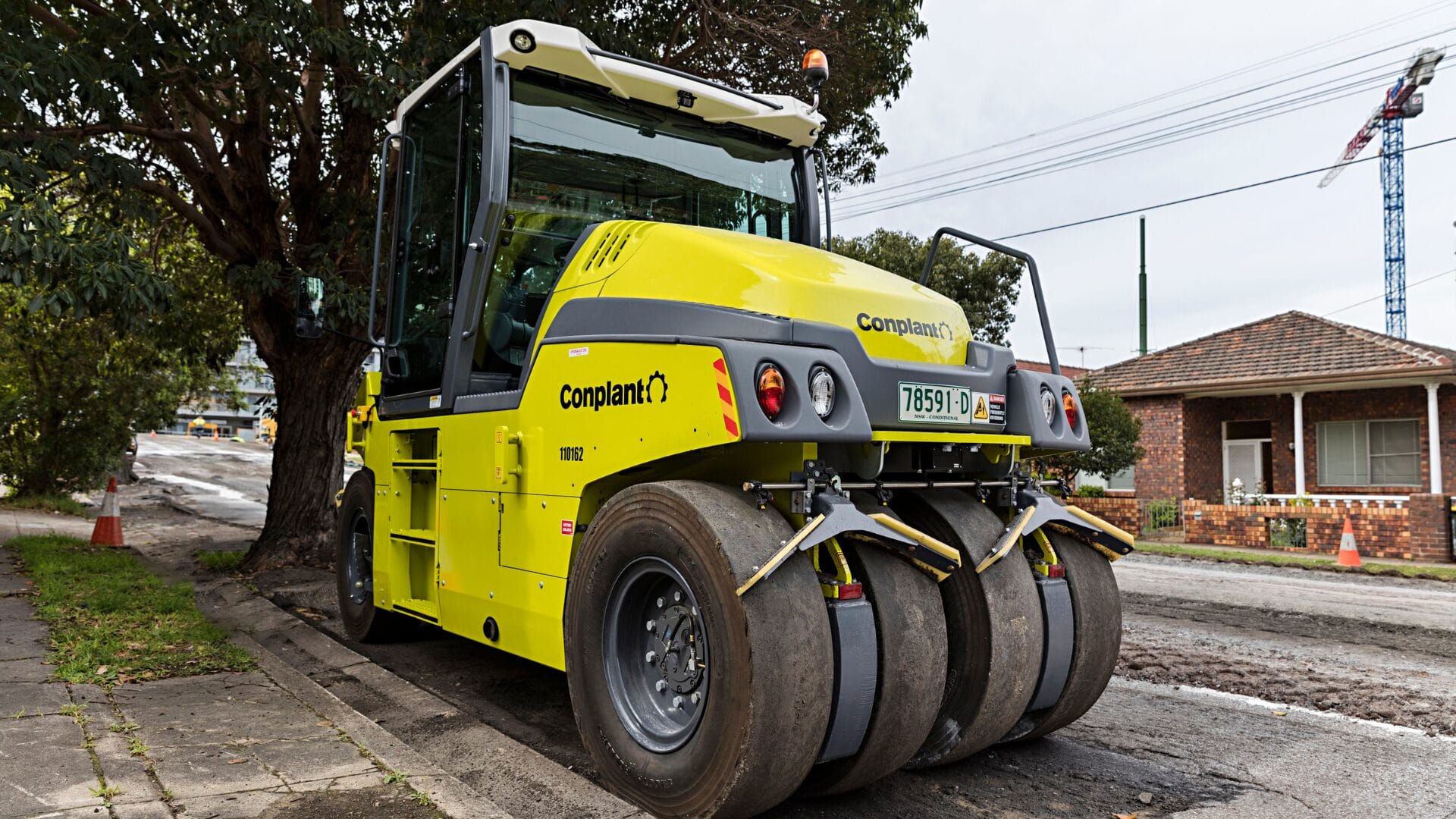
Delivering these outcomes in practice also depends on the on-site capability. Access to reliable, fit-for-purpose compaction equipment through providers such as Conplant supports more consistent ground performance and helps ensure design intent is achieved during construction.
Accessing available funding is also key. Many of the current programs are specifically designed to support proactive adaptation, but they require clear planning and evidence-based proposals.
Finally, collaboration remains essential. Sharing knowledge, learning from other councils, and engaging with industry can help accelerate the adoption of effective strategies.
Ultimately, the focus on resilience is not just about responding to today’s challenges but preparing for what comes next.
Looking ahead
This is not about replacing traditional engineering approaches. It is about strengthening them.
As Australia’s climate continues to evolve, so too must the way we design, build, and maintain our road networks. The cost of inaction is already being felt through increasing repair bills, disrupted communities, and reduced asset life.
Resilient road infrastructure is not a future aspiration. It is a current requirement.
The tools, funding, and knowledge are already in place, supported by industry capability and access to the right equipment through providers such as Conplant. The opportunity now is to bring these elements together and embed resilience into everyday decision-making.
Because when roads are designed to withstand the conditions they will face, not just the conditions they have faced, the benefits extend far beyond the pavement.