When it comes to heavy equipment transport, every move carries risk: regulatory risk, safety risk, cost risk and schedule risk. Whether you’re relocating a compactor, excavator or entire plant fleet across a site or state, you’ll be dealing with loads that are large, costly and sensitive to mishandling. On Australian worksites with changing terrain, unpredictable weather and strict state-based rules, the margin for error is small.
This article outlines the most common challenges in heavy equipment transport from weight and terrain to weather, permits and deadlines and provides clear, actionable strategies to overcome them. Throughout, we’ll reference practical solutions, real-world regulatory requirements and highlight one of the innovative pieces of equipment in our fleet, the Self‑Levelling Transport Trailer, which enhances safety and efficiency when loading and unloading mobile plant.
Contents:
1. Identifying the Key Challenges in Heavy Equipment Transport
2. Effective Strategies to Overcome Transport Challenges
3. Legal and Regulatory Considerations in Heavy Equipment Transport
4. Cost Management in Heavy Equipment Transportation
5. Future Trends in Heavy Equipment Transport
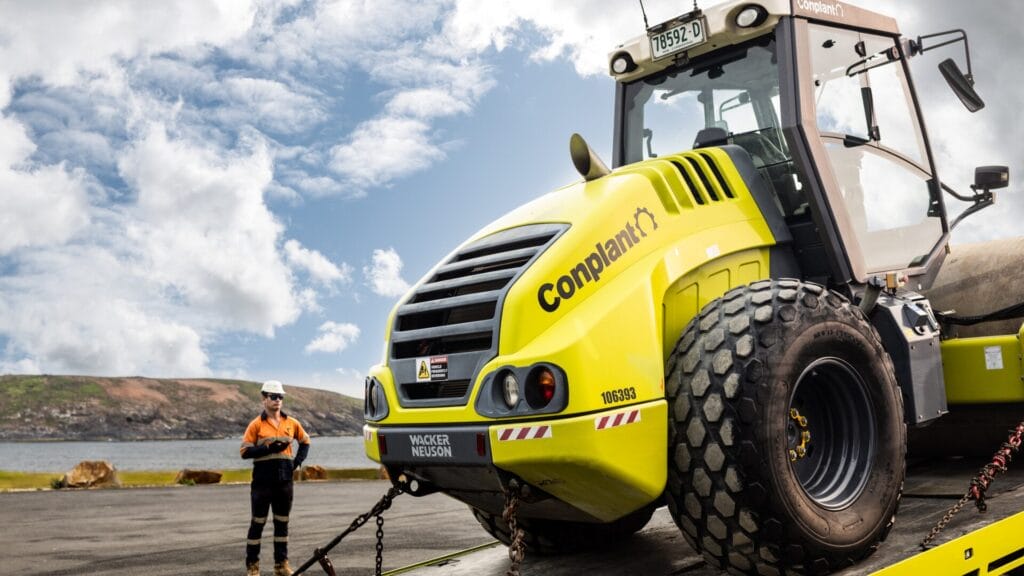
1. Identifying the Key Challenges in Heavy Equipment Transport
Transporting heavy equipment is far more than ‘truck it from A to B’. Below are the principal hurdles you’ll face.
Weight Limitations and Compliance with Regulations
Australian laws set strict limits on mass, dimensions and loading for heavy vehicles. For example, under the National Heavy Vehicle Regulator (NHVR) framework, loads exceeding standard dimensions or mass require special permits or notices. According to the NHVR, non-compliance can result in route closures, fines or even impoundment. Ensuring your trailer configuration, axle groups, suspension and deck strength align with these requirements is essential. The NHVR Load Restraint Guide provides clear national standards for securing loads safely.
Navigating Difficult Terrain and Road Conditions
Often, the easiest part of the job is the drive down a sealed highway. The harder part is the last few kilometres: unsealed access, soft ground, steep grades, and limited overhead clearance. A route that looks feasible on paper may hide hazards low bridges, weight-restricted roads or tight turns. As Callcorr Transport notes, pre-planning and local route surveys are critical to avoid delays and damage.
Addressing Mechanical Failures and Maintenance Issues
For those who own and operate their own transport fleet, preventing downtime is key to maintaining productivity and safety. Even well-maintained equipment can face unexpected wear or component stress under heavy use. Regular maintenance schedules, comprehensive and daily pre-trip inspections, and timely servicing help ensure that trailers, braking systems, hydraulics and suspensions remain reliable across long hauls and rough terrain. Building preventive measures into standard operating procedures protects both your investment and your team.
Ensuring Safety for All Road Users
Moving large machines means you’re not only moving your own risk, but you’re also sharing the road with everyone else. According to the Government of South Australia’s Department for Infrastructure and Transport, oversize and overmass loads require detailed planning to ensure safety for all road users. This includes securing permits, using escort vehicles, displaying warning signage, placards and flags, and adhering to travel time restrictions.
Poor load restraint remains one of the leading causes of transport incidents across Australia. Following the NHVR Load Restraint Guide ensures compliance and provides clear standards for safe and effective load securing.
Safety extends beyond the vehicle itself; operators, site staff and other road users all depend on careful planning, disciplined restraint techniques and clear communication. By integrating these principles into every stage of heavy equipment transport, fleet owners can minimise risk and maintain the highest safety standards across their operations.
Dealing with Adverse Weather Conditions
Australia delivers weather extremes: high heat, heavy rain, wind, and dust storms. For heavy equipment transport, weather can impact terrain access, trailer stability, braking distances, clearance of overhead lines, traction and more. A storm, flash flood or gale can delay or complicate a move significantly.
Managing Time Constraints and Project Deadlines
Many equipment moves are linked to broader project milestones: site mobilisation, machine hand‑over, and earthworks phases. Permit approval delays, road closures, or vehicle breakdowns can upset the schedule and cash‑flow. With heavy equipment, delays often mean crane hire, idle labour, extra logistics – so time is a key pressure.
2. Effective Strategies to Overcome Transport Challenges
Having identified the challenge areas, here are practical strategies to ensure your heavy equipment transport is safe, compliant and efficient.
Choosing the Right Trailer and Equipment
Selecting the appropriate trailer for your load is fundamental; it must match the equipment’s weight, dimensions, type (tracked, wheeled), and the terrain. For example:
- Low‑loader or drop‑deck trailers for tall machines.
- Multi-axle distributors and spreader deck trailers for heavy and wide mass.
- Purpose-built plant trailers for frequent moves. The Basic Trailers comparison guide offers a good breakdown of each type’s advantages.
- In our fleet, we operate the Self-Levelling Transport Trailer. A trailer with hydraulically adjusted ramps and levelling sensors that automatically adapt to uneven ground before loading or unloading. This design mitigates rollover risk, machinery damage and worker exposure, while enabling safer operation even on soft or greasy surfaces.
Planning and Executing Detailed Route Assessments
A thorough route survey identifies hazards before they become problems. Key checklist items:
- Overhead clearance, bridge load limits, surface condition.
- Permitted travel times, pilot vehicle requirements and state or road‑authority conditions, as outlined by Brown and Hurley.
- Contingency plans for road closures or weather delays.
- Ground access at site: Can the load be dropped safely? Are ramps or ground preparation required?
Implementing Safety Protocols and Training
With heavy equipment transport, risk is high, so clear protocols and training matter. Actions to take include:
- Pre-departure safety brief for driver and site team.
- Machine loading/unloading plan: spotters, clear communication, safe slopes.
- Load restraint verification: chains, straps, and rated tie-down points, according to NHVR’s Load Restraint Guide.
On‑road safety: appropriate signage, lighting, escort vehicles if required, and clear communication with traffic management.
Maintaining Communication with All Stakeholders
Transport often involves multiple parties: equipment owners, operators, haulage contractors, site supervisors, local councils or road authorities. Miscommunication commonly causes delays. Best practice:
- Assign a logistics coordinator to centralise communication.
- Use live status updates: trailer departure, ETA, arrival, and any issues.
- Confirm site readiness for arrival: hardstand, access, ramp set‑up, unloading gear, machine positioning.
- Engage permit-holding parties early and keep them informed of changes.
Regular Equipment Maintenance and Inspections
Even the best plan fails if the trailer or transport rig suffers a mechanical issue. Preventive maintenance is vital:
- Pre-trip mechanical inspection of trailer, brakes, axles, tyres, suspension.
- For haulage vehicles: ensure power, braking, and steering systems are fully serviceable.
- On arrival at the site, the unloading site, deck condition, ramp location / level and tie-down anchors should all be understood.
- Document inspection. Use maintenance logs to better predict downtime.
Utilising Technology for Real-Time Tracking
Modern transport management benefits from real-time tracking and telematics:
- GPS tracking of transport vehicles allows you to monitor ETA changes, delays or deviations.
- Sensor data from trailer: e.g., load tilt, ramp angle, weights, deck condition (especially in self-levelling trailers).
- Communication platforms: use online dashboards or mobile apps to provide live status updates to all stakeholders.
This helps proactively manage issues rather than reacting after the fact.
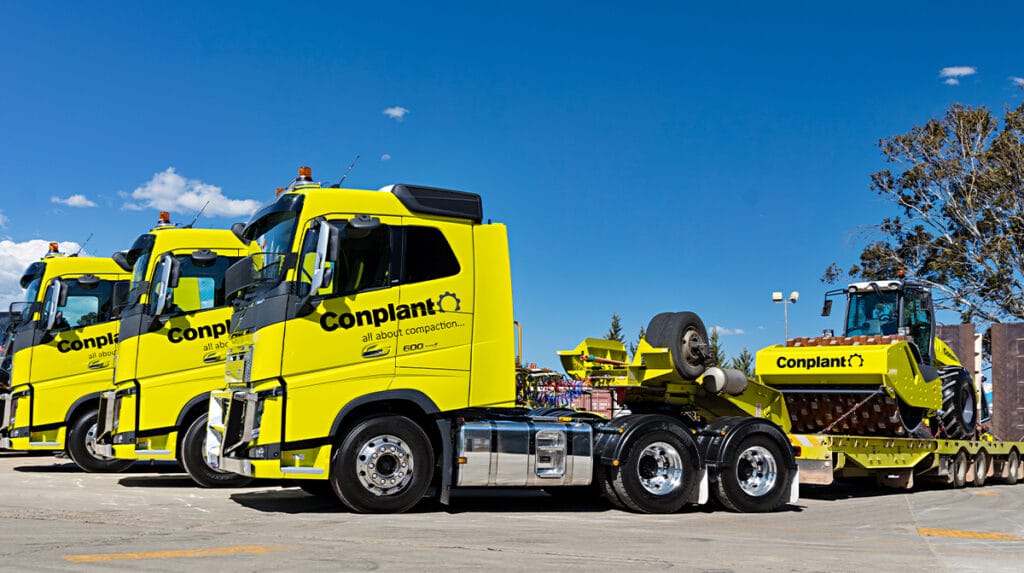
3. Legal and Regulatory Considerations in Heavy Equipment Transport
Ensuring you’re compliant with regulations isn’t optional, it’s integral to safe and lawful movements for the protection of all.
Understanding Permit Requirements for Oversized Loads
Loads that exceed standard mass or dimension limits fall under overmass/oversize categories. The NHVR outlines when special permits or notices are required. For example, loads wider than 3.2 m or longer than 26 m in NSW require pilot vehicles or escorts, as stated by Transport for NSW.
Navigating Local and State Regulations
While the HVNL (Heavy Vehicle National Law) provides a national base, each state or territory may impose additional requirements such as time-of-day restrictions, local road access, and curfews. Brown and Hurley highlight the importance of checking authority maps and notices for each route, confirming escort requirements, and obtaining the correct permits when crossing borders.
Environmental Compliance and Best Practices
Heavy transport can impact roads and the environment if not managed carefully. To minimise any disruption to traffic flow, operators should avoid tracking mud onto public roads, reduce vibration and noise during loading/unloading, and comply with environmental management plans specific to each project.
4. Cost Management in Heavy Equipment Transportation
Transport is not just a logistical challenge; it’s a cost centre. Effective cost management improves profitability and reduces risk exposure.
Budgeting for Unexpected Costs
Major transport tasks frequently incur unforeseen costs: permit delays, vehicle breakdowns, road closure detours, site access prep, and weather hold‑ups. Include contingencies for:
- Time‑extension costs (crew waiting, plant idle).
- Extra equipment (escort vehicles, traffic management).
- Damage repair (machinery, trailer, roads or infrastructure).
- Weather-induced costs (rerouting, extra days).
Evaluating Transport Options: In-House vs Outsourcing
Deciding whether to manage transport internally or outsource to logistics specialists is key. Consider:
- In-house: more control, but requires investment in trailers, pilot vehicles, compliance knowledge, and maintenance.
- Outsource: access to specialist gear and expertise, but less direct control and possibly higher cost per move.
Reducing Risks to Minimise Financial Losses
Risk reduction directly links to cost avoidance. Key tools:
- Make sure transport partners are qualified, experienced and licensed.
- Ensure insurance coverage is adequate for the trailer, haulage vehicle and the load itself.
- Use the right equipment to reduce the chance of damage or delay.
- Maintain clear communication to avoid misunderstandings or idle time.
- Track actual transport costs vs budget and analyse variances to refine future quotes.
5. Future Trends in Heavy Equipment Transport
Transport isn’t static. Staying ahead of emerging technologies and trends gives you a competitive edge.
Innovations in Transport Technology and Equipment
New trailer technologies, telematics, sensor networks and automation are shaping transport:
- Self-levelling hydraulic ramps (as with our Self‑Levelling Transport Trailer) improve loading safety on uneven ground.
- Telematics in trailers to monitor deck tilt, trailer height, axle loads, and live tracking / communication.
- Autonomous or remotely controlled pilot vehicles may also eventually support oversize loads.
- Materials and design improvements reducing trailer tare weights and increasing capacity.
Growing Importance of Sustainability and Eco-Friendly Transport Solutions
Transport providers are increasingly under pressure to reduce carbon footprint, avoid infrastructure damage and use fuel-efficient combinations. This means:
- Optimised routing to minimise kilometres and idle time.
- Use of lighter trailer materials, improved aerodynamics.
- Integration of low-emission prime movers.
- Site access logistics designed to reduce environmental disruption.
Impact of Evolving Regulations on Transportation Practices
As transport laws evolve, you’ll see trends like:
- More digital permit systems (electronic applications, real-time route clearance).
- Stricter oversight of heavy vehicle compliance and chain of responsibility obligations.
- Infrastructure improvements (bridges, roads) that permit heavier/more complex loads, changing route planning.
- Increased focus on safety systems and driver/operator fatigue management.
Final Thoughts on Overcoming Transport Challenges
When you boil it down, successful heavy equipment transport comes down to four pillars: planning, equipment, compliance, and communication. Get ahead of the load dimensions, match the trailer and tow rig to the task (including specialist solutions where required), understand the regulatory environment, and keep all stakeholders aligned.
Frequently Asked Questions (FAQs)
A common difficulty is loading/unloading on uneven ground or slippery surfaces. Without the right trailer (like a self-levelling model) and proper ramp angle, the machine may bog, tip or be unsafe for the operator to load / unload.
By thorough route‑survey planning, matching the correct trailer and rig, ensuring permit/escort compliance, and maintaining real-time communication throughout the move.
- Ensure firm, stable hardstand or ground for loading/unloading.
- Use rated tie-down and restraint systems.
- Keep untrained personnel clear by securing load‑movement zones and ensure all personnel carry appropriate PPE and follow safety briefings.
Common problems include lack of servicing, permit delays, poor route access, ageing transport equipment/fleet, increasing regulatory burden / costs and unexpected weather or terrain issues. The Loadlink guide provides further insight into these issues.
Conduct a load‑profile assessment (dimensions, weight, access, ramp requirements), then compare trailer options (capacity, deck height, axles, ramps). For uneven ground or remote sites, consider a specialist trailer like the self-levelling type mentioned above.
Weather can affect site ground stability (mud, flood, soft surfaces), reduce traction for transport vehicles and machines, increase braking distances, cause schedule delays and raise safety risk (wind effects, thermal expansion/shrinkage).
Check provider credentials, heavy equipment‑haulage experience, permit handling capability, regulatory knowledge (NHVR, state rules), and ask for case studies or references of similar moves. Also, ensure they carry insurance and have modern, well-maintained equipment.